Eggshell membrane as a pet food and feed ingredient: legal name, formulation and labelling in the EU
Eggshell membrane has no entry in the EU Catalogue of feed materials: it is declared via the Feed Materials Register. Intended for feed, it is Category 3 animal by-product material; in a complete feed or a treat it is formulated as a micro-ingredient.
Eggshell membrane is a pet food and feed ingredient used mainly in supplements and treats for dogs, cats and horses. In the EU it has no entry of its own in the Catalogue of feed materials. You identify it through the notifications in the Feed Materials Register, such as 004721 “egg membrane” (protein min. 90 %). When it goes to feed, it is a Category 3 animal by-product. On the label, the safe option is to highlight its presence and its composition.
In short
Name: Catalogue entry 9.15.5 “Egg shells, dried” does not fit the membrane. Use the name of a Register notification that describes your product, native or hydrolysed.
Regime: eggshell membrane intended for feed is Category 3 animal by-product material. Your plant uses it under its own registration (in Spain, for example, SILUM) and, if it makes pet food, with an animal by-products approval.
Formulation: in a complete feed or a treat it goes in at low inclusion rates, through a premix. In supplements, published labels declare between 6 % and 20 %. There is no public data on its stability during extrusion, so we recommend adding it after the extruder or using it in low-temperature formats.
What is eggshell membrane as a feed material?
Eggshell membrane is the inner film of the eggshell. It is separated, dried and milled into a powder. It is a protein feed material: the eggshell membrane powder from Egglin (reference EGGM-300) is 100 % hen's egg membrane (Gallus gallus). Its specification v01.05 (batch EGGM3002610, 2 October 2026) gives these values:
Protein: min. 90 % (Kjeldahl method).
Collagen types V and X: min. 8 %; elastin: min. 15 % (ELISA).
Total glycosaminoglycans: min. 4 %; hyaluronic acid: min. 2 % (HPLC).
Moisture: max. 10 %. Particle size: 200–350 µm, pinkish-white powder with a neutral taste.
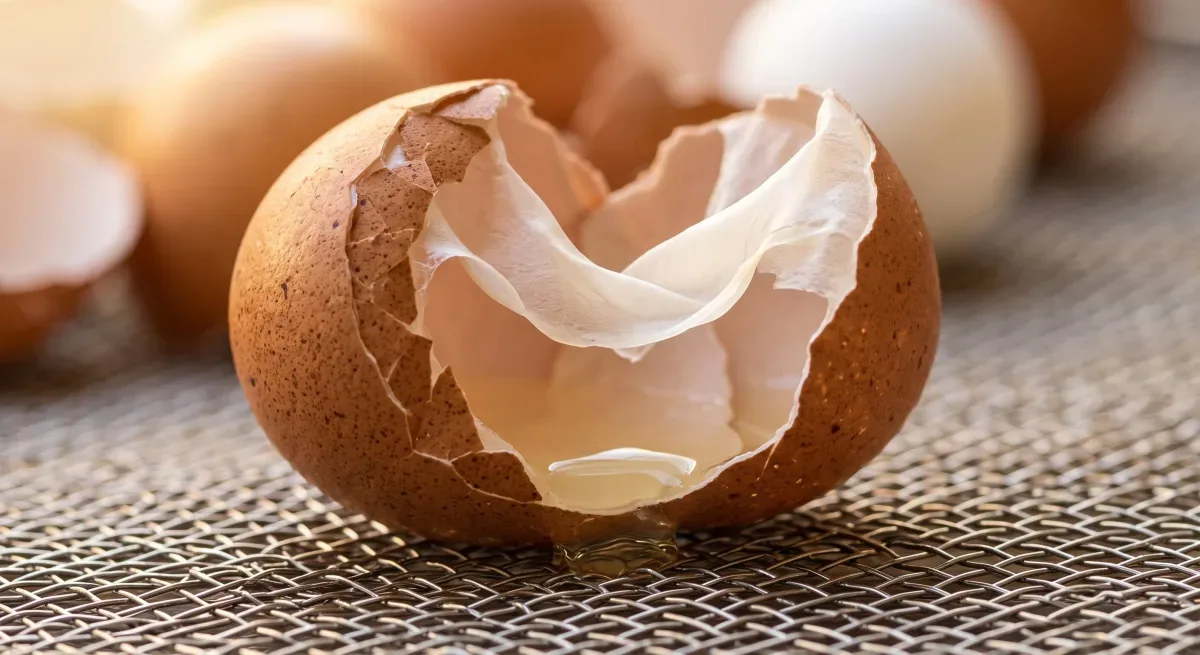
The Egglin membrane is native. It is separated from the shell mechanically, with water, without enzymes or hydrolysis (written confirmation from Egglin, 13 October 2026). The process starts with pre-processing close to the source of the shells: washing, centrifuge draining and sieving. The material then travels refrigerated on the same day. At the main plant it is separated, dried, milled, stabilised, sterilised and packed.
The Feed Materials Register treats native and hydrolysed membrane as different products. The Egglin safety data sheet describes the membrane as partly soluble: in water it disperses and only dissolves in part.
What name do you declare in a feed?
The Catalogue of feed materials (Regulation (EU) No 68/2013, with the annex replaced by Regulation (EU) 2022/1104) is voluntary. Even so, “the name of a feed material listed in Part C may be used only for a feed material complying with the requirements of the entry concerned” (Part A; see also Article 24(5) of Regulation (EC) No 767/2009).
The egg entries run from 9.15.1 to 9.15.5, and none of them is the membrane. The closest one, 9.15.5 “Egg shells, dried”, describes the “product obtained from poultry eggs, after the content (yolk and albumen) has been removed”. Its compulsory declaration is crude ash: it is a mineral feed material. A separated membrane with at least 90 % protein does not match that description, so we do not recommend using that name. It is, however, the reference name for eggshell powder, which Egglin also supplies.
For a feed material that is not in the Catalogue, Article 24(6) of Regulation 767/2009 applies. The person who places it on the market for the first time must notify it to the Feed Materials Register. The Register already holds third-party notifications that describe a membrane like the Egglin one:
004721 “egg membrane” (2014): mechanical separation from eggshells, dried and milled; protein min. 90 %, ash max. 6 %.
008896 “Eggshell membrane” (2020) and 009090 “egg membrane 90” (2021): mechanical separation and protein min. 90 %.
Hydrolysed forms have their own notifications: 006493 (partially hydrolysed) and 009698 (hydrolysate).
The Register itself warns that being listed is not an assurance of feed material status. Check the Register guidance to see whether you can rely on an existing notification or must notify yourself. Specification v01.05 does not state ash content, while 004721 sets a maximum of 6 %: test it at goods-in. And if your feed highlights the membrane, the label must give its percentage (Article 17(2)(a)).
Which animal by-product rules apply, and what registration does your plant need?
When it is intended for feed, eggshell membrane falls under the animal by-products (ABP) rules as Category 3 material. Article 10 of Regulation (EC) No 1069/2009 places “egg by-products, including egg shells” in that category (point (k)(ii)). It also includes products of animal origin that are no longer intended for human consumption for commercial reasons (point (f)). The text names egg shells, not the membrane. Treating the membrane as an egg by-product is the reasonable reading.
In Spain, for example, the plant that makes the feed registers in SILUM, the register set up by Royal Decree 629/2019. A plant that makes pet food with animal by-product material also needs prior approval (Article 5(2) of the Royal Decree and Article 24(1)(e) of Regulation 1069/2009). For other activities, a prior notification to the regional authority is usually enough (Article 6(1)).
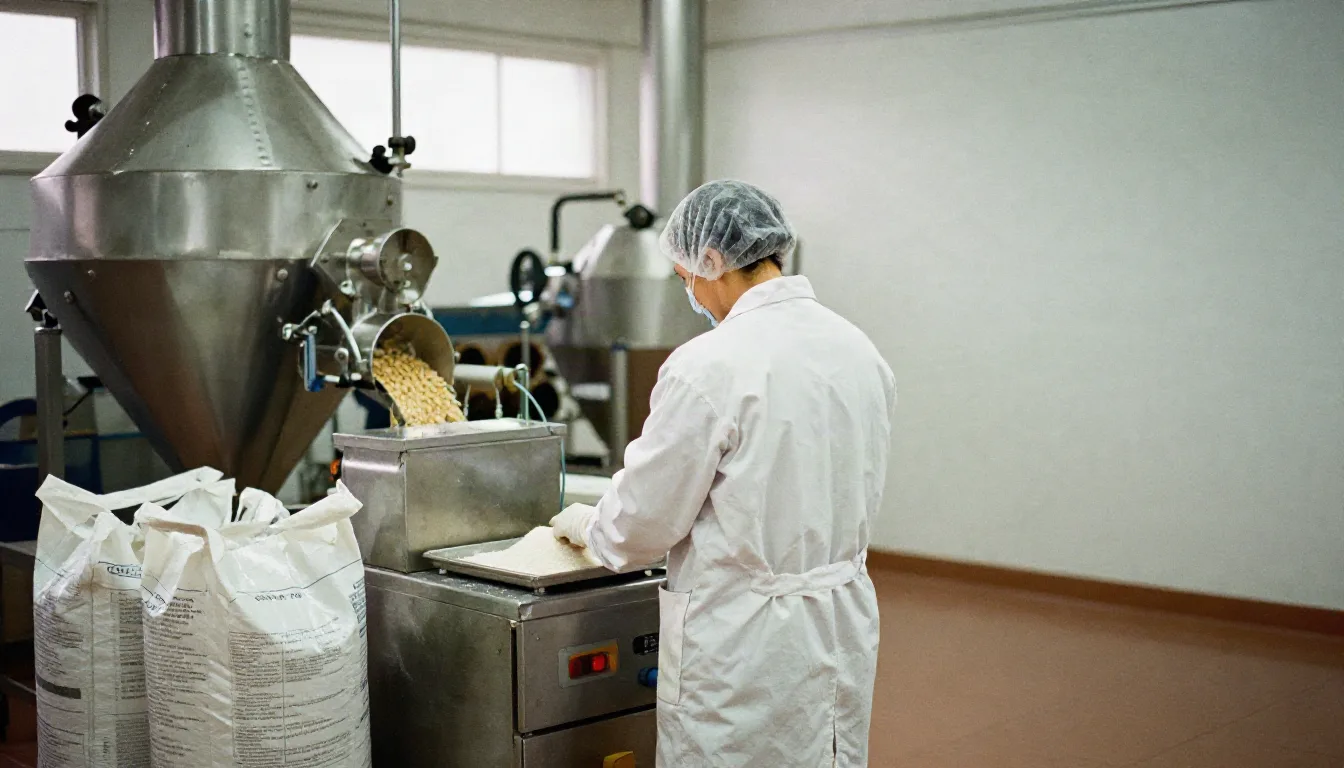
The supply model is this: Egglin supplies the membrane as a raw material, and the manufacturer makes the feed under its own registration. The membrane arrives as a food ingredient, produced in a plant with health registration no. TR-10-K-035208. The formulation, the plant registration and the feed labelling are the manufacturer's responsibility.
Does it need novel food authorisation? No. Under Article 2 of Regulation (EC) No 178/2002, “‘Food’ shall not include: (a) feed”.
What can the label say, and what can it not say?
Article 13(1) of Regulation 767/2009 allows the label to draw attention to the presence of a substance or to a nutritional characteristic. The claim must be “objective, verifiable by the competent authorities and understandable by the user of the feed”, and its scientific substantiation must be available. Article 13(3) forbids claiming that the feed will prevent, treat or cure a disease.
Feed for particular nutritional purposes is a separate framework. Each intended use in Regulation (EU) 2020/354 has its own composition criteria. Claiming one without meeting them is forbidden (Article 13(3)(b)). No single feed material gives access to them on its own.
Describing the membrane by its composition also supports its status as a feed material. Regulation (EU) No 892/2010 establishes that hyaluronic acid, which the membrane contains (min. 2 % in the specification), is not a feed additive. Recommendation 2011/25/EU considers feed materials to include “products of vegetable or animal origin in their natural state, fresh or preserved, and products derived from the simple processing thereof”. It also notes that a feed material can have an additive function, “but this should not be the only intended use”.
You can write: “with egg membrane (X %)”, the analysis of the raw material (protein, collagen types V and X, elastin) and the process (“native membrane, mechanically separated with water”).
You cannot write: names of diseases, promises about the animal's condition, or intended nutritional uses whose criteria the feed does not meet.
How do you formulate it: in the mix, in the coating or in a supplement?
On published labels, eggshell membrane for dogs and horses appears mainly in supplements: chewable tablets, soft chews, sprinkle powders and sachets for horses. Some treats also declare it. We have not found any complete dry feed that declares it.
In a complete feed or a treat, the membrane goes in at low inclusion rates and you handle it as a micro-ingredient. The Kansas State University guide on testing mixer performance uses a coefficient of variation (CV) below 10 % as the reference. In supplements the share is higher: published labels declare between 6 % and 20 %. Its low bulk density (0.30–0.50 kg/l, safety data sheet) and its 200–350 µm particle size increase the risk of segregation. We recommend premixing it with a carrier of similar density and particle size, adding it after the macro-ingredients and checking homogeneity with a tracer.
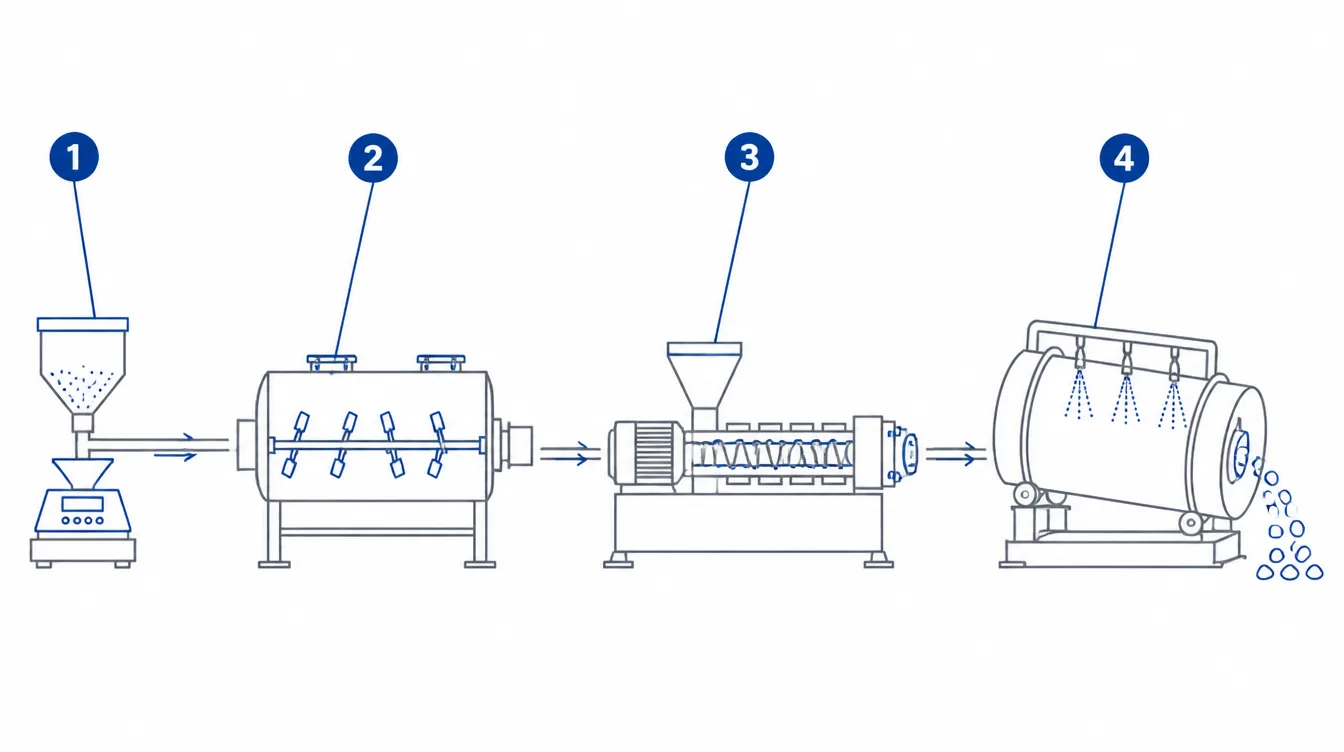
Micro-ingredient premix: the membrane is diluted in a carrier before it enters the batch.
Mixer: homogeneity is checked with a tracer (CV below 10 %).
Extruder: there is no public data on the stability of the membrane during extrusion.
Post-extrusion coater: the membrane is applied with the fat onto the formed kibble.
Our position on extrusion: we know of no independent study that measures the membrane before and after extrusion. We recommend adding it in the coater, or using it in supplements and low-temperature treats. If you need it in the mix, validate this with your own trial that analyses the kibble before and after extrusion.
Coating also needs a trial. The particles need a fat layer or a binder to stick, and you must measure the loss of fines at bagging. In liquids and gels the membrane is partly soluble, so it stays in suspension and needs a thickener or agitation. It is supplied in 20 kg bags, with a 2-year shelf life in a cool, dry place.
What documents should you ask an eggshell membrane supplier for?
This is what a feed manufacturer needs to label the raw material and accept each batch:
Document | What you need it for | What Egglin provides |
|---|---|---|
Specification and certificate of analysis per batch | Declaring the feed material (crude protein, moisture) and goods-in control | Specification v01.05 (batch EGGM3002610, 2 October 2026), with test methods |
Microbiology (specification) | Accepting a dry powder of animal origin | Salmonella absent in 25 g; Enterobacteriaceae < 10 CFU/g; aerobic count max. 10² CFU/g |
Contaminants | Your plant's contaminant control plan | Hg, As, Pb and Cd < 1 mg/kg (ICP-MS); declaration on pesticides and heavy metals (12 May 2026) |
Origin and nature | Traceability and the raw material file | Certificate of origin; declarations of biological origin (12 May 2026) and of non-GMO and BSE/TSE status |
Establishment registration | Knowing who produces it and under which authority | Health registration TR-10-K-035208 (7 December 2023), food production establishment |
Quality and fraud systems | Supplier approval | ISO 9001:2015 and ISO 22000 (28 March 2025); food fraud vulnerability assessment (VACCP); food defence plan on request |
Safety data sheet | Handling, storage and transport | Safety data sheet; not dangerous goods for air transport |
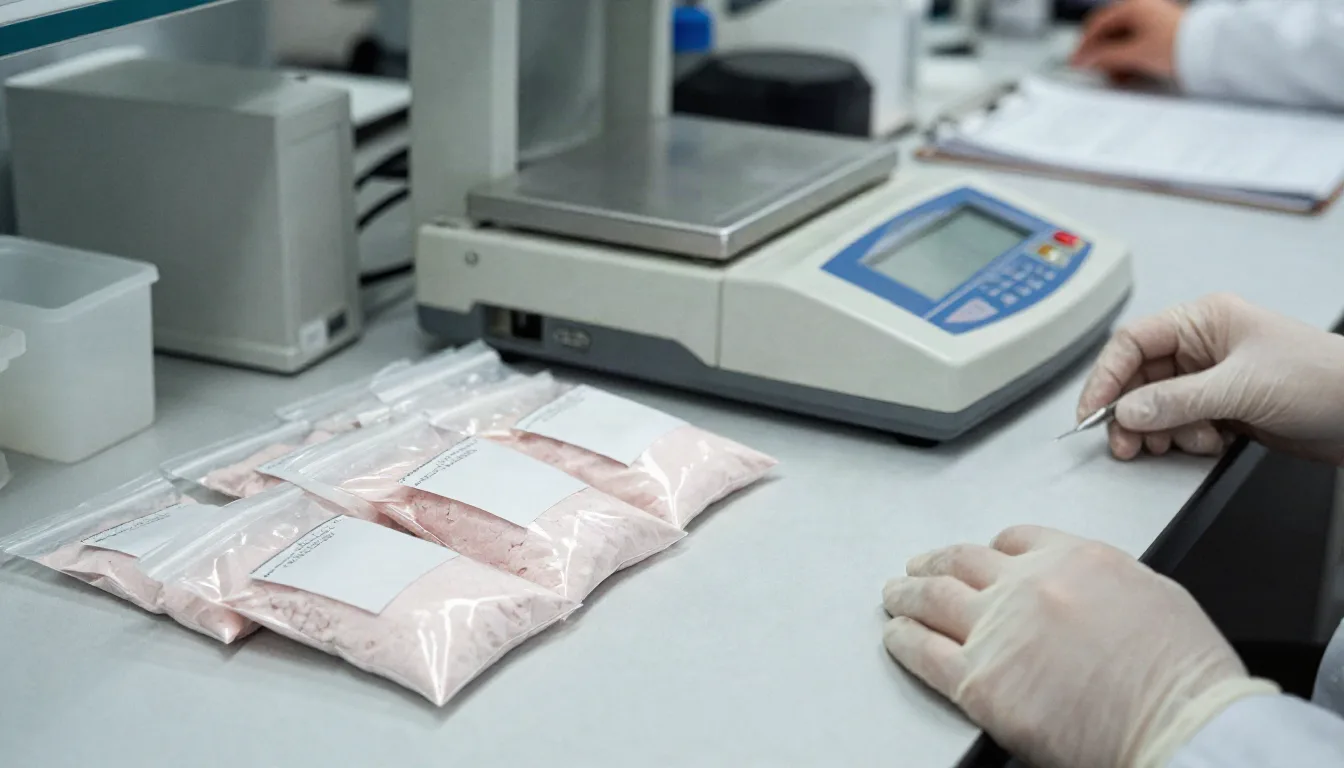
If your plant also makes food for people, egg is a mandatory allergen there (see allergen labelling for egg-derived ingredients); Egglin has an allergen management policy. If you also make food supplements for people under your own brand, see what Egglin offers for private-label eggshell membrane and eggshell supplements.
To get started, you can request the technical data sheet and the certificate of analysis of the current batch, or a sample for your formulation trial, from the Egglin eggshell membrane page.