Private label eggshell membrane and eggshell powder supplements: what Egglin offers and what the EU requires
Egglin offers eggshell membrane tablets and eggshell powder sachets under the customer’s brand. To sell them in the EU, your company must be the responsible operator, notify the product where required and label it in each country’s language.
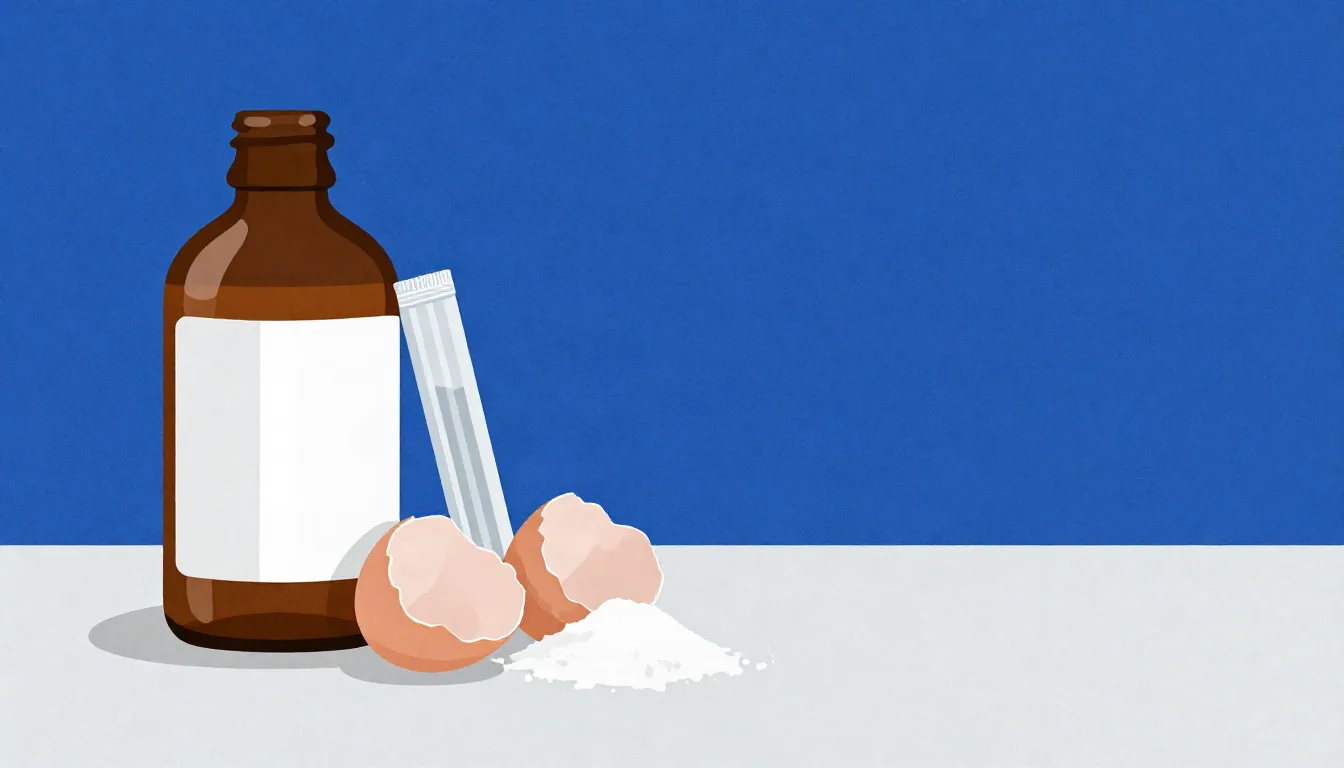
Egglin, known in Europe for its bulk eggshell membrane and eggshell powder, now also offers private label food supplements (contract manufacturing under the customer’s brand), made in Türkiye (Turkey): tablets in bottles and powder in single-dose stick sachets. Egglin handles the formula and the packing. To sell them in the EU, your company (or the importer, if the brand is not established in the EU) must be the responsible operator. That operator must notify the product and label it in the language of each country.
In short
- Egglin shows two reference finished products: a tablet with 300 mg of eggshell membrane and 80 mg of vitamin C, and sachets of 2.5 g of eggshell with 940 mg of calcium.
- The current packs are made for the Turkish market and are not for sale in Spain. The EU label is written from scratch.
- Before the first sale, the product must be notified in each Member State that requires it, for example to AESAN in Spain or to the DGAV (Directorate-General for Food and Veterinary, Portugal). The duty must also be confirmed in TARIC. It is not necessarily zero.
What finished products does Egglin offer today?
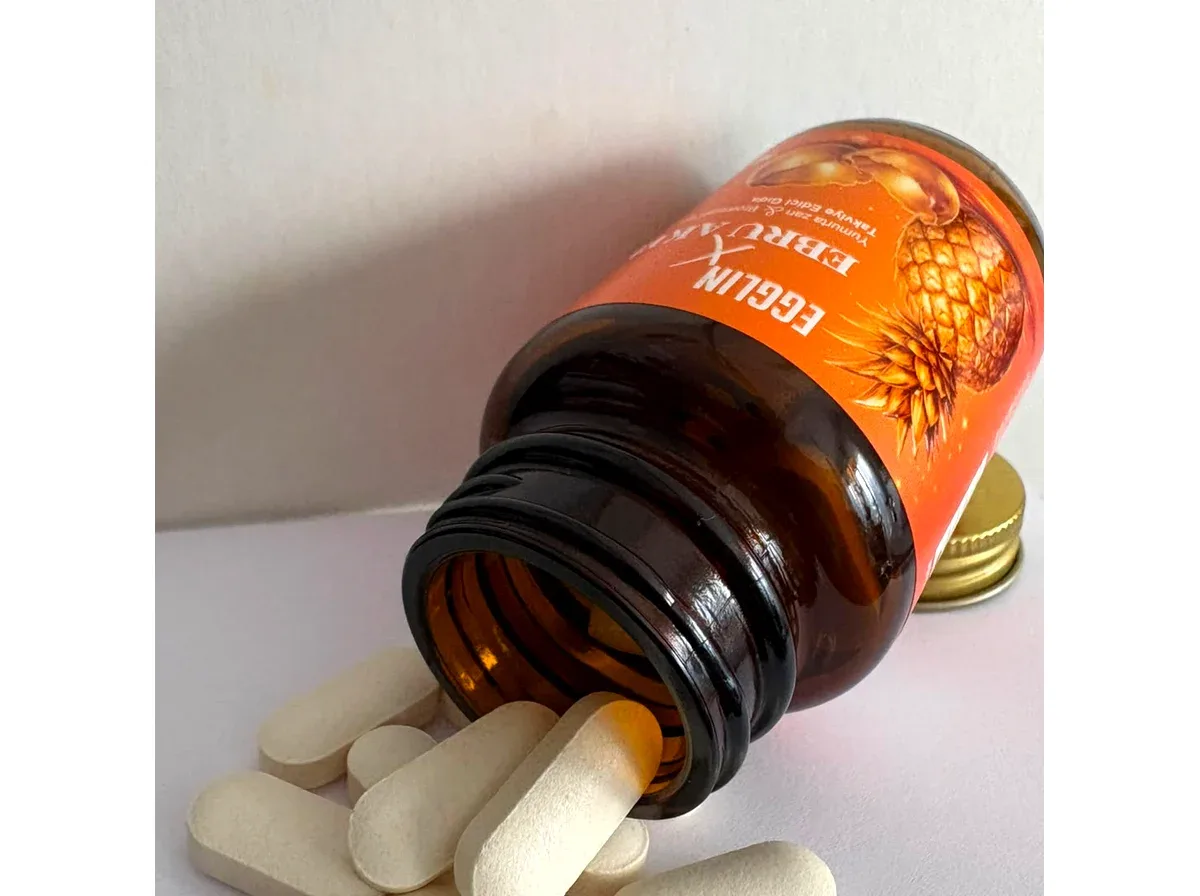
Egglin shows two finished products it already makes, one per dosage form: a tablet and a powder in sachets. Egglin makes the sachets at its plant in Bandırma (Türkiye). Egglin formulates the tablet as the food business operator, and a Turkish pharmaceutical laboratory manufactures it for Egglin. AHCEBRIAN S.L., its official distributor in Spain, presents them as reference formulations, not as a sales catalogue. The quantities come from the label of each pack and are also on the Egglin eggshell membrane and eggshell powder page.
Product | Egglin × Ebru Akel Joint Complex | Eggshell powder in sachets | Bulk raw material |
|---|---|---|---|
Form | Tablet | Powder in a heat-sealed sachet | Membrane powder or eggshell powder |
Content | Per tablet: 300 mg of eggshell membrane, 100 mg of bromelain, 100 mg of Boswellia serrata extract and 80 mg of vitamin C (100 % NRV) | Per sachet: 2.5 g of eggshell with 940 mg of calcium (117.5 % NRV) | Membrane: collagen min. 10 % and elastin min. 15 % (data sheet of batch EGGM3002605) |
Pack | Amber glass bottle, 30 tablets | Box of 60 sachets | 5 kg bags, boxed to order |
Page on the website |
NRV is the nutrient reference value in Annex XIII of Regulation (EU) No 1169/2011: 800 mg for calcium and 80 mg for vitamin C. The powder in the sachets contains 37–40 % elemental calcium, and it is the same eggshell that Egglin supplies in bulk. The membrane data sheet (batch EGGM3002605, 10 August 2026) states a shelf life of 5 years unopened. These are composition data, not claims.
What does Egglin do, and what is left to you?
Egglin takes care of the product up to the finished pack: it formulates, produces the raw material, doses and packs the sachets in Bandırma and labels the product with the customer’s brand. Egglin’s ISO 9001 and ISO 22000:2018 certificates (28 March 2025) cover the production of eggshell powder and membrane powder. What happens after the border is the job of whoever places the product on the EU market.
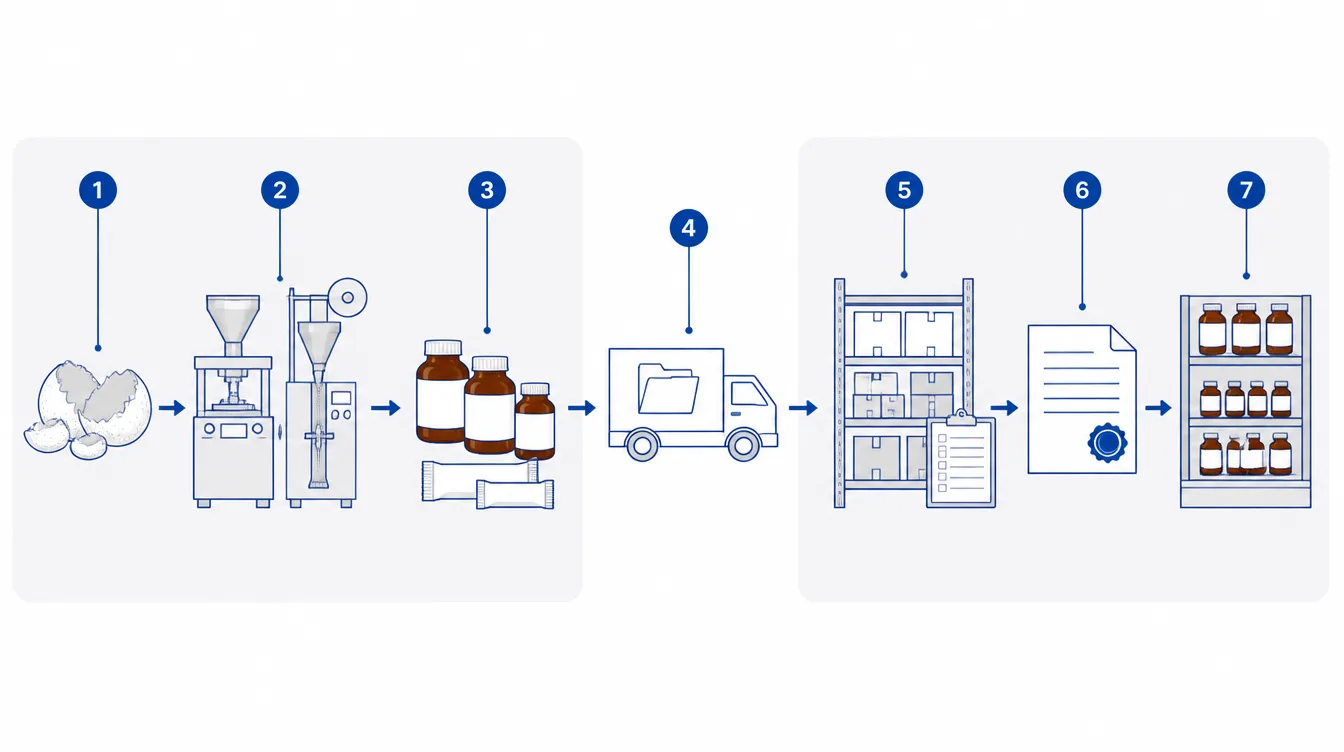
Figure 1. The route of an Egglin supplement under the customer’s brand. Egglin handles steps 1 to 3. Step 4 depends on the agreed delivery terms. Steps 5 to 7 are the customer’s job.
- Raw material: eggshell and eggshell membrane.
- Formulation; tabletting at a contracted laboratory or filling into sachets in Bandırma.
- Packing and labelling with the customer’s brand.
- Transport with its documents.
- Responsible operator in the EU: receipt and storage.
- Notification to the competent authority.
- Point of sale.
The law sets who does steps 5 to 7. Under Regulation (EU) No 1169/2011, Article 8(1), the operator under whose name the food is marketed is responsible for the food information. If that operator is not established in the EU, the importer is responsible. Its name and address must appear on the label (Article 9(1)(h)). Regulation (EC) No 178/2002 requires imported food to comply with EU food law (Article 11), and each operator is responsible at its own stage (Article 17).
Can the existing Turkish packs be sold in the EU?
No. The current packs are made for the Turkish market and are not for sale in Spain; their label does not meet EU requirements as it stands. According to the photos of the current packs that the manufacturer sent us (22 August 2026), the label shows:
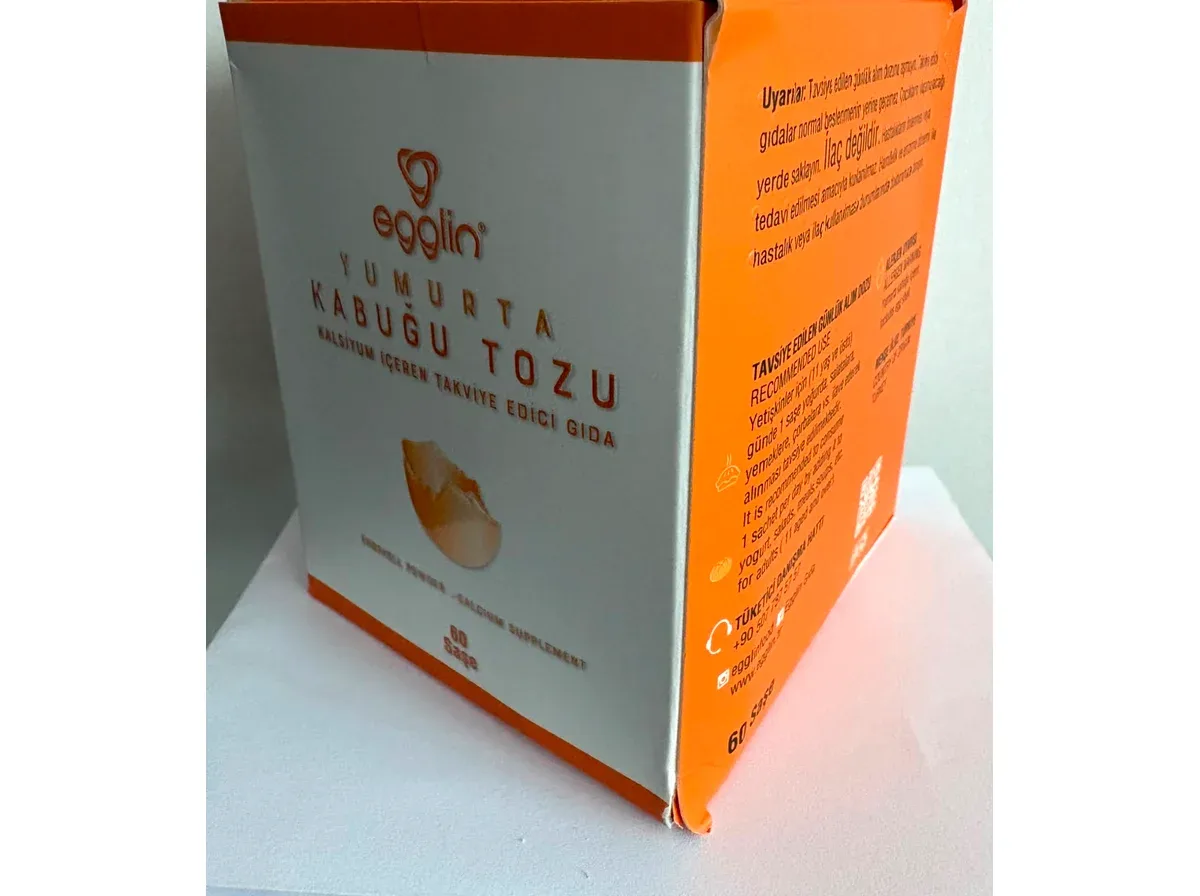
- The name “Takviye Edici Gıda” (food supplement). Each country requires the name in its own language. In Spain, for example, the mandatory name is “complemento alimenticio” (Royal Decree 1487/2009, Article 5).
- The recommended daily dose and the warnings, in Turkish (partly in English on the sachet box). On that box, their content matches the statements in Article 5 of the Spanish Royal Decree. The problem is the language.
- The allergen warning “yumurta kabuğu içerir” (contains eggshell). It stays, in the language of the destination country.
- The country of origin, “Türkiye”. The bottle label also states that the main ingredients have a different origin. If your label gives the country of origin, it must also give the origin of the primary ingredient, or state that it is different (Regulation (EU) No 1169/2011, Article 26(3)).
- A Turkish consumer helpline and the details of the Turkish operator. In the EU, the label shows the name and address of the responsible operator in the EU.
The formula, the quantities, the allergen warning and the origin data stay. The language, the responsible operator, the mandatory national statements (in Spain, those of Royal Decree 1487/2009) and the presentation texts are redone.
Who notifies the supplement, and to which authority?
The operator responsible for marketing notifies the product, with a copy of the label, before or at the time of the first sale. Directive 2002/46/EC allows Member States to require this notification (Article 10). Each Member State sets its own procedure. Spain and Portugal, the two examples below, both require it.
Spain: AESAN for a supplement made in Türkiye
Article 9 of Royal Decree 1487/2009 assigns the notification to the manufacturer or to the operator responsible for first placing the product on the market. If the product comes from a non-EU country, it falls to the importer. Products made in Spain or in another EU country are notified to the regional authority (comunidad autónoma) if the responsible operator is based in Spain. Products from non-EU countries, such as one made in Türkiye, are notified to AESAN, the Spanish Agency for Food Safety and Nutrition. Online procedure: notification of placing food supplements on the market.
Portugal: DGAV
In Portugal, the product is notified to the DGAV with its notification table and the label in Portuguese. From that moment, the product can be marketed.
Notification is not an authorisation. The DGAV says so expressly: it does not assess the product or validate the labelling, and it checks later, by sampling. In Spain, the notification completes the procedure in Article 9; the label remains your responsibility.
What can the label of a supplement with eggshell membrane say?
We recommend starting from the reference formula and writing the EU label from scratch. Do not translate the Turkish label or the manufacturer’s brochure. The brochure is written for another market and contains claims that are not authorised in the EU.
Of the actives in the two formulas, only two have claims authorised in Regulation (EU) No 432/2012. They are used with their exact wording:
- Calcium (eggshell powder), for example:
- “Calcium is needed for the maintenance of normal bones.”
- “Calcium is needed for the maintenance of normal teeth.”
- “Calcium contributes to normal muscle function.”
- “Calcium contributes to normal energy-yielding metabolism.”
- Vitamin C (Joint Complex), for example:
- “Vitamin C contributes to normal collagen formation for the normal function of cartilage.”
- “Vitamin C contributes to the normal function of the immune system.”
Condition of use: the product must be at least a “source of” calcium or vitamin C as defined in the Annex to Regulation (EC) No 1924/2006. Check this against your final formula.
The eggshell membrane (with its collagen, elastin and hyaluronic acid), the bromelain and the Boswellia serrata extract are declared with their name and their quantity per dose, without a claim. Regulation (EC) No 1924/2006 also covers pictorial representations: an image on the pack can also be a claim.
If you already know what you want to launch, tell us the format, the actives and the sales market. We will send you the reference formula sheet and the manufacturing conditions.
Which documents do you need to import food supplements into the EU?
For tariff treatment, the key document is the A.TR movement certificate. The duty you pay depends on the composition of the product. The A.TR certifies that the goods are in free circulation in Türkiye or the EU (European Commission).
Food supplements are usually classified under heading 2106 (food preparations not elsewhere specified or included). The certificate of analysis of Egglin’s membrane (batch EGGM3002605) states HS code 2106.10.00. A tablet with four actives or eggshell powder in sachets, however, is classified by its own composition. Under heading 2106, the duty can include an agricultural component that depends on that composition (sugars, starch).
For this reason, we do not assume a zero duty. Confirm the code and the duty in TARIC with the final formula, or ask the customs authority for a binding tariff information (BTI) decision. More context on what importing from Türkiye involves.
What to do now: 5 questions to settle before the first order
- Who will be the responsible operator in the EU? Your company, if the brand is yours and is established in the EU; if not, the importer.
- Which formula and which format? Start from the four-active tablet or the 2.5 g sachet and decide what changes.
- Who writes the EU label, and in which languages? From scratch, with the mandatory statements of each country of sale and only the claims your formula allows.
- To which authority will you notify, and when? Check the procedure in each Member State where you will sell: for example, AESAN in Spain and DGAV in Portugal, before or at the time of the first sale.
- Which tariff code and which documents go with each shipment? Confirm it in TARIC or with a BTI, and ask for the A.TR certificate and the certificate of analysis of the batch. The minimum order and lead times for your format are set in a consultation with us.