CELDUR and CEHAPO
Rigid-walled spaces to set up a camp, a hospital or a command post when a tent falls short. CELDUR solves the logistics problem: it arrives in the footprint of a 20-foot container and, on site, it opens out in minutes to six times its volume. CEHAPO is a rigid dome-shaped cell assembled by hand from parts, with no foundations, for modular camps and hospitals.
- in transit: the footprint of a 20' ISO container
- 35 m³
- deployed: CELDUR 1:1, 2:1 and 3:1
- 92 / 150 / 210 m³
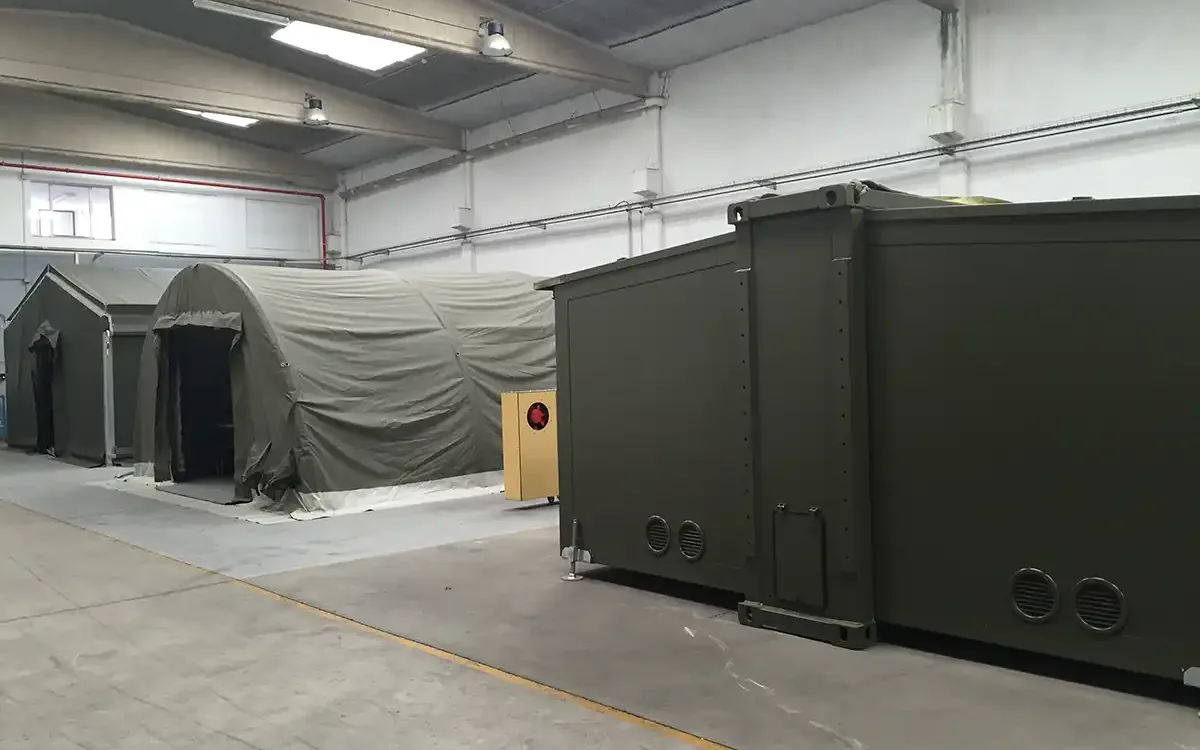
It arrives as a 20-foot container and opens out to six times its volume
In a deployment, the limiting factor is almost always transport: how many trucks, ships or aircraft are needed to carry the working spaces. CELDUR travels folded in the footprint of a 20-foot ISO container, so it is handled by the same cranes, trucks and vessels as any other container.
On site, it opens out in minutes with a winch. Depending on the model, the result is one large module (1:1) or two or three modules (2:1 and 3:1), fitted out as dormitory, operating theatre, kitchen, ablutions or office.
Volume in transit and deployed
- In transit (20' ISO footprint)
- 35 m³
- CELDUR 1:1 · one module
- 92 m³
- CELDUR 2:1 · two 75 m³ modules
- 150 m³
- CELDUR 3:1 · three 70 m³ modules
- 210 m³
Volumes as stated in the manufacturer’s catalogue. Dimensions, weights and deployment time for each model are in the data sheet.
Where it is used
- Disaster response and emergency accommodation
- Field hospitals and medical posts
- Command posts and deployed offices
- Camp kitchens, dining areas and ablutions
Products in this line
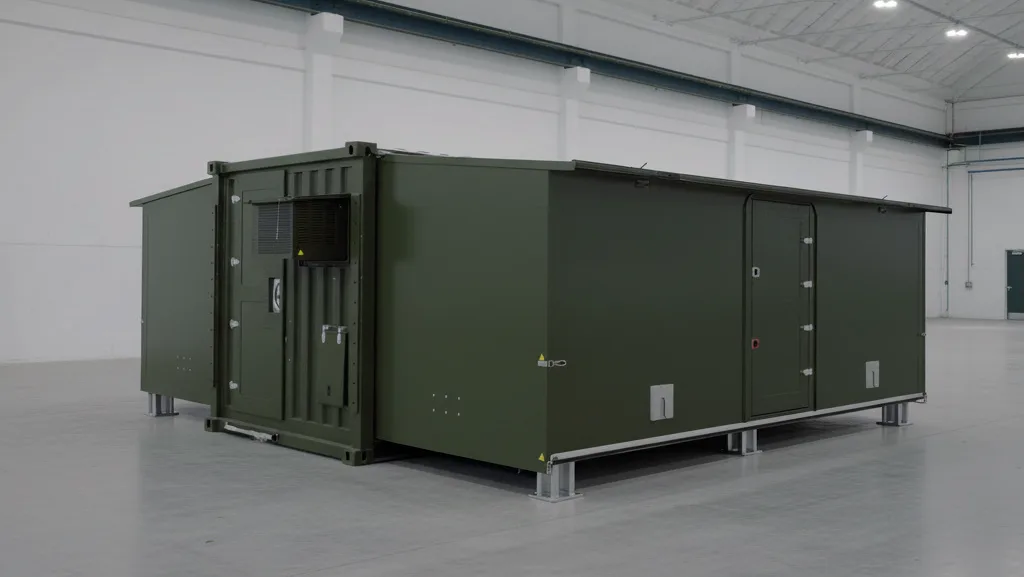
CELDUR
210 m³ · deployed from 35 m³ in transit (celdur 3:1)
Deployable container that travels in the footprint of a 20-foot ISO container and opens out in minutes to 92, 150 or 210 m³.
View product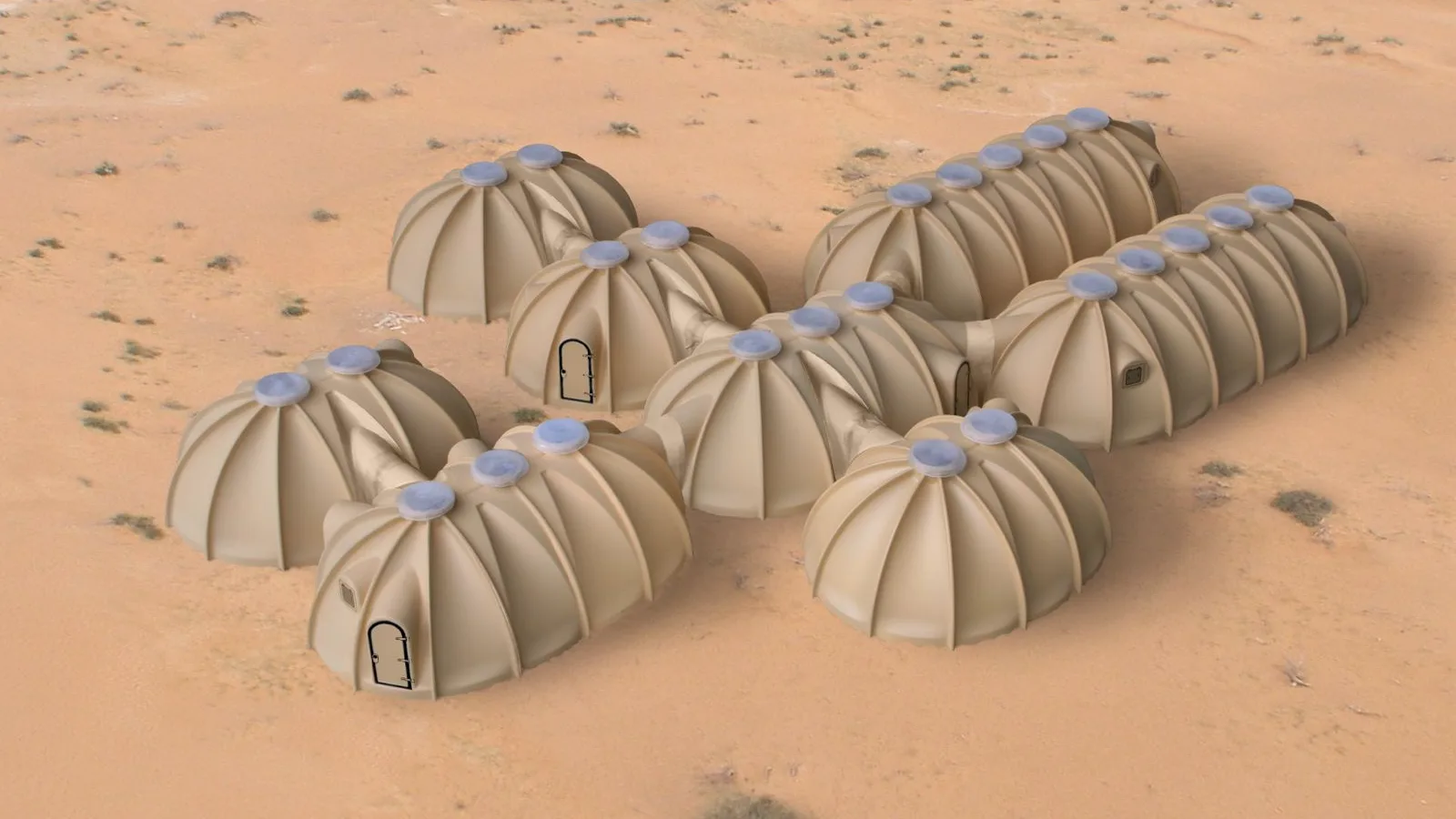
CEHAPO
Rigid dome-shaped cell that two people assemble by hand, with no foundations or machinery, for camps, command posts and field hospitals.
View productAbout CELDUR and CEHAPO
Which CELDUR model suits each case?
All three travel in the same transport space. The 1:1 gives a single 92 m³ space, suitable for an operating theatre or an office. The 2:1 and 3:1 split 150 and 210 m³ into two or three modules and get the most volume out of each container shipped: dormitories, kitchens or ablutions. Tell us the use and the number of people and we will propose the combination.
How long does it take to deploy a CELDUR?
The manufacturer states minutes, using a winch. The exact time, dimensions and weights of each model are in the data sheet, which we send with the proposal.
CELDUR or CEHAPO?
CELDUR if the deployment will move as containerised cargo and you want the most volume per shipment. CEHAPO for modular camps and hospitals made of rigid parts assembled by hand. If you need a panel shelter that is relocated and extended, see the CUBE system. All of them combine with Hispanovema’s tents and support services.
Tell us about the deployment you need
Number of people or beds, services, climate, timeframe and how it will reach the site. We propose a configuration and send you data sheets and a quotation.