Hand-held, curved, large-format or mobile ballistic shields: which fits each operation and what to ask for
A hand-held shield with viewport is for entry; a lightweight curved shield, for patrol; a large-format or mobile shield, to cover a team; a briefcase, for close protection. What each standard tests and what to ask for in the data sheet.
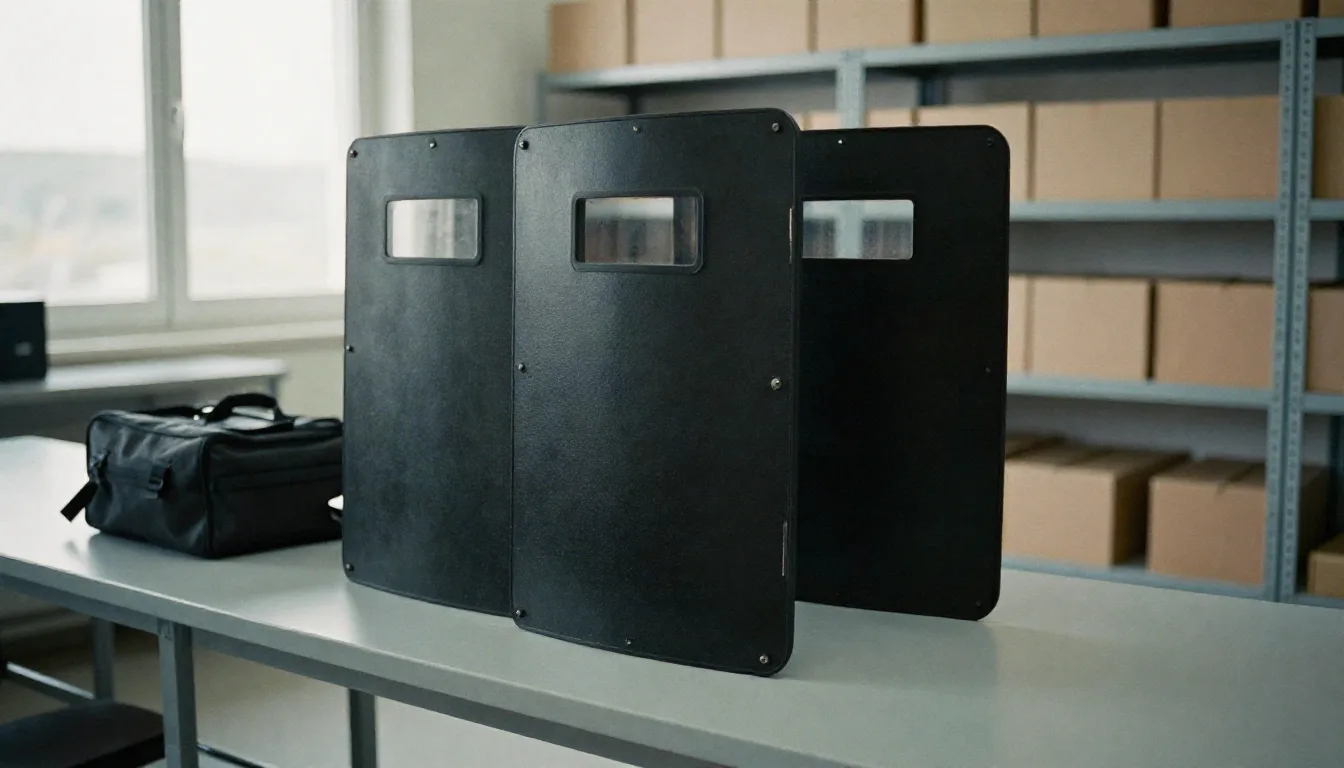
A hand-held ballistic shield with a viewport is for the person who advances during an entry. A lightweight curved shield is for the patrol that needs rapid protection. A large-format shield or a mobile shield on wheels covers a team at a checkpoint, and a fold-out briefcase protects discreetly in close protection work. Choose by the operation and by how the shield is transported. Then check that the data sheet gives the test standard, which part of the shield was tested and the viewport data.
In short
- The operation and the transport decide the type: where the shield is kept until it is used matters as much as its protection level.
- Not every standard tests the same thing: NIJ 0108.01 (1985) tests a sample of the material of at least 30.5 × 30.5 cm; ASTM E3347/E3347M-26 tests the complete shield, with edges, viewport and fixings.
- The data sheet must go beyond the level: standard and edition, laboratory report, protected area, weight, viewport, handles, lighting and warranty.
What types of ballistic shields are there, and which operation does each one suit?
A ballistic shield is protection that a person holds, pushes or deploys in front of themselves or their team. The types differ in how much they cover and how they move. The ballistic shield range of Garanti Kompozit, the Turkish manufacturer that AHCEBRIAN represents commercially, includes the five types in the table. The table has no figures: the level and the weight depend on the configuration ordered, and the manufacturer provides them on request.
Attribute | Hand-held with viewport | Lightweight curved | Large-format or mobile | Close protection briefcase | Portable flexible |
|---|---|---|---|---|---|
Typical operation | Entry and advance of a team | Patrol and rapid response: the law enforcement ballistic shield for patrols | Covering a team during an entry or at a checkpoint | Close protection of people | Explosive ordnance disposal |
What it covers | The person who carries it | The person who carries it | Several people at once | The protected person, once unfolded | The area where it is placed |
How it moves | On the arm; a bar lets it stand upright | On the arm, with either hand | The mobile shield is pushed on wheels | Closed, as a nylon briefcase | Folded, as a bag with handles |
Viewport | Yes, with a metal frame | With or without viewport | Yes | Not listed in the data sheet | Not listed in the data sheet |
First question to ask | Standard and viewport test; lighting run time | Curvature radius and use by left-handers | Panels, joints and spare parts | Unfolded area and how it opens | Which standard it was tested to |
What does a hand-held shield with viewport and lighting offer?
The hand-held shield with a viewport is the shield used by entry teams. It protects the person in front and lets them see where they are going. The Garanti Kompozit GRBK-216 has a polyurea coating, a viewport and a firing port with an alloy frame. It has rubber-covered alloy handles, a foam pad, adjustable arm straps and protected corners. It can be used with the left or the right arm, and a bar lets it stand upright.
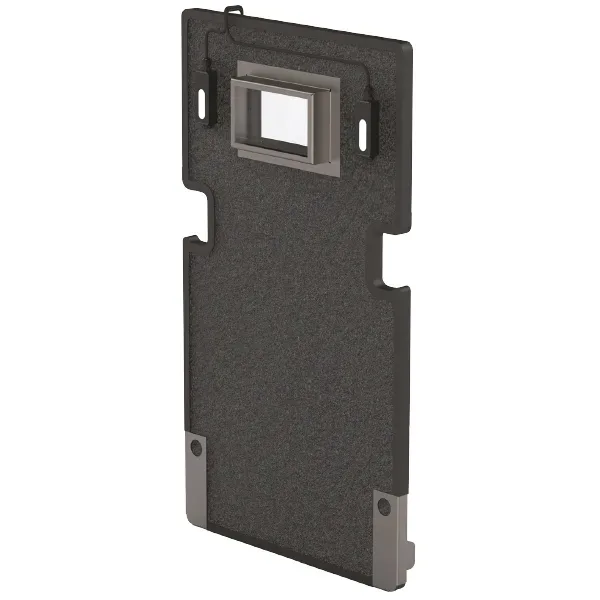
When you compare offers, ask for the lighting data in the same detail as the body data. According to the Garanti Kompozit Product Catalogue 2026, the GRBK-216 has LEDs with 6 W of total power and flash and full power modes, operated from a control unit. The battery is rechargeable, 12 V and 3,500 mAh, with 4 h of run time at full power. The alloy frame of the LED is rated IP65; the cable socket, IP68. The unit also has a safety valve for pressure and moisture. Ask any manufacturer for the same data: without run time and an IP rating, “with lighting” tells you nothing.
The viewport is the point that needs the most questions. A shield with a viewport combines two materials, the body material and the transparent one, plus the joint between them. If the test was done on a sample of the body material, it says nothing about the viewport or its frame. Ask for the level and the standard of the viewport separately, and ask whether the test included the frame.
When is a lightweight curved shield, with or without viewport, enough?
A lightweight curved shield is enough when the unit needs to take cover quickly and will not advance behind the shield for long. The GRBK-217 and GRBK-410 curved shields from Garanti Kompozit are made of ultra-high-molecular-weight polyethylene (UHMWPE) with a single curve, that is, curved in one direction only. They have a polyurea coating and a foam pad, and they work with either hand. According to the manufacturer’s data sheet, the viewport model is for advancing; the compact model is for rapid protection on patrol.
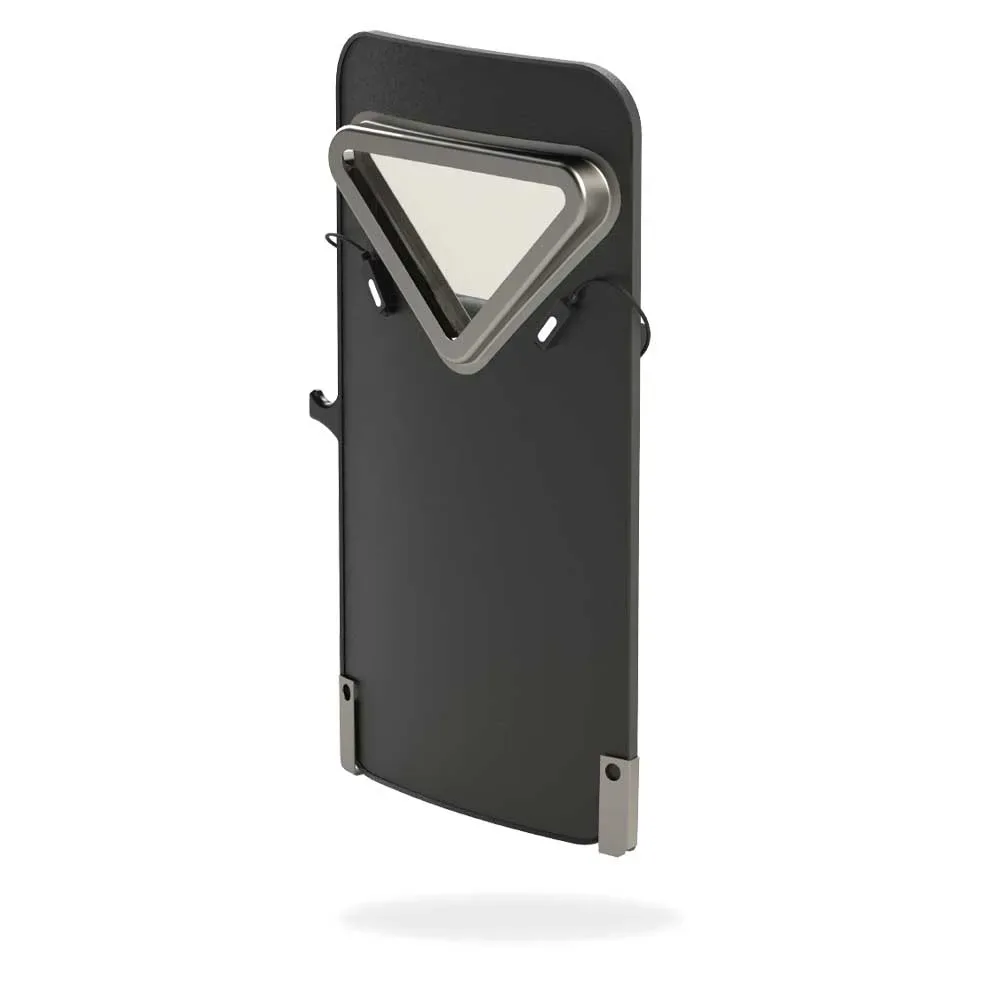
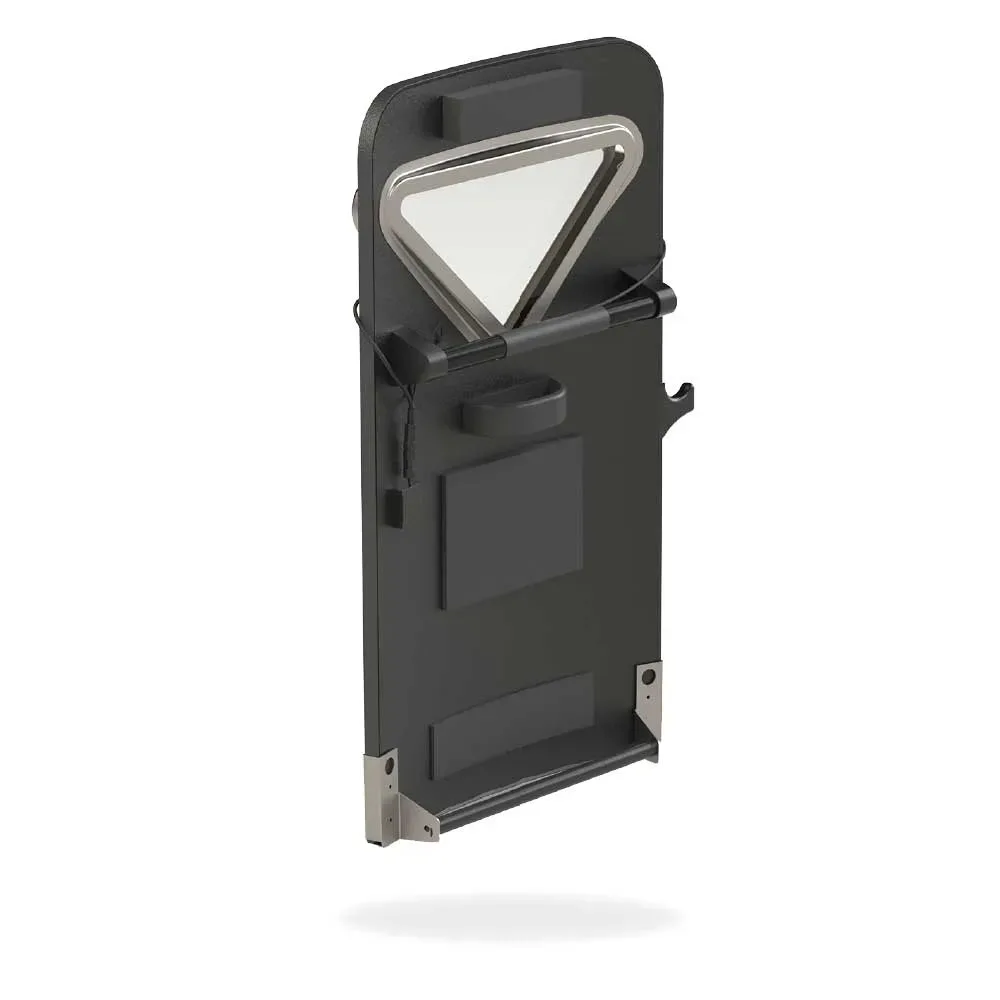
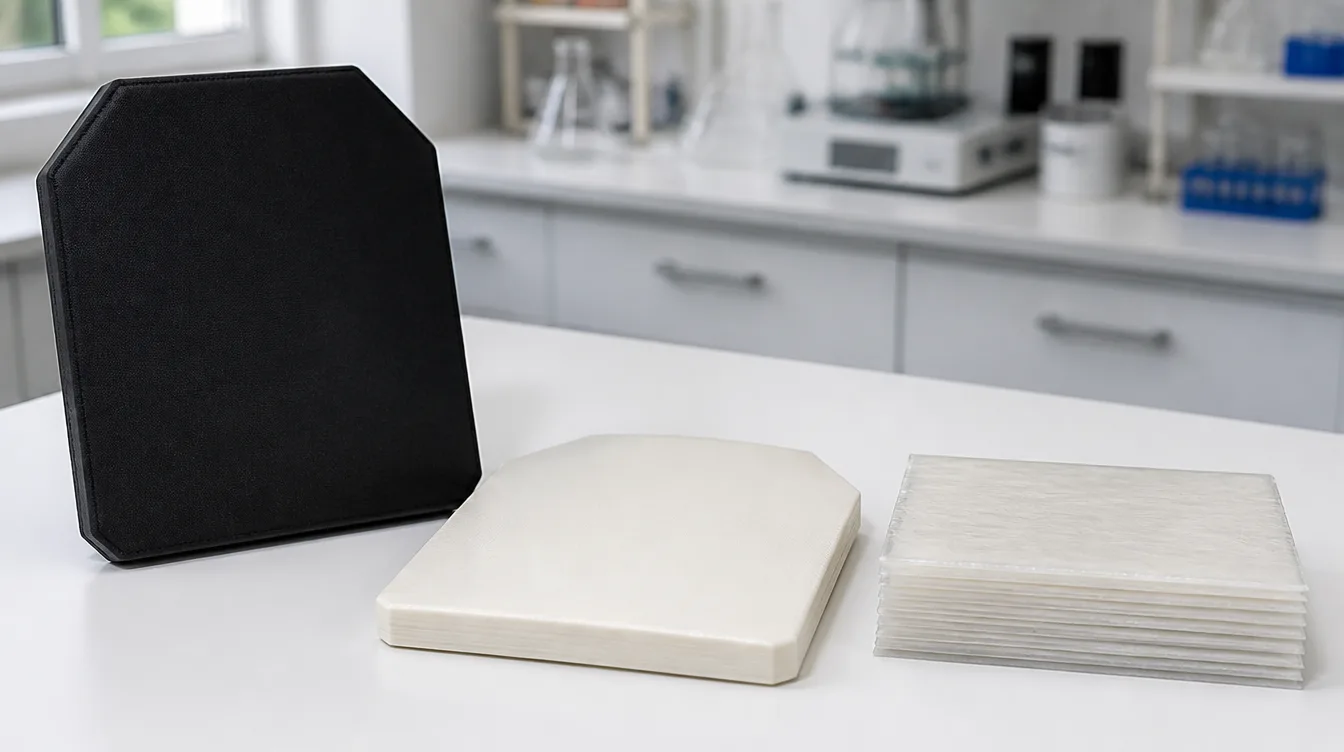
For a patrol that carries the shield in the vehicle and uses it to take cover, we do not recommend a viewport by default. It adds one more part to test and to maintain. Choose it if the unit will advance behind the shield. Ask for the curvature radius, because it sets how far the shield wraps around the person who carries it. Also check that the handles work for left-handers without changing parts. We explain what UHMWPE means compared with ceramic, including for storage, in UHMWPE or ceramic in ballistic plates.
Large-format or mobile shield on wheels: when must a whole team be covered?
Choose a large-format shield or a mobile shield when the protection must cover several people at once, during an entry or at a checkpoint. The Garanti Kompozit line of large shields and mobile shield includes large-format shields with a viewport and a three-panel mobile shield.
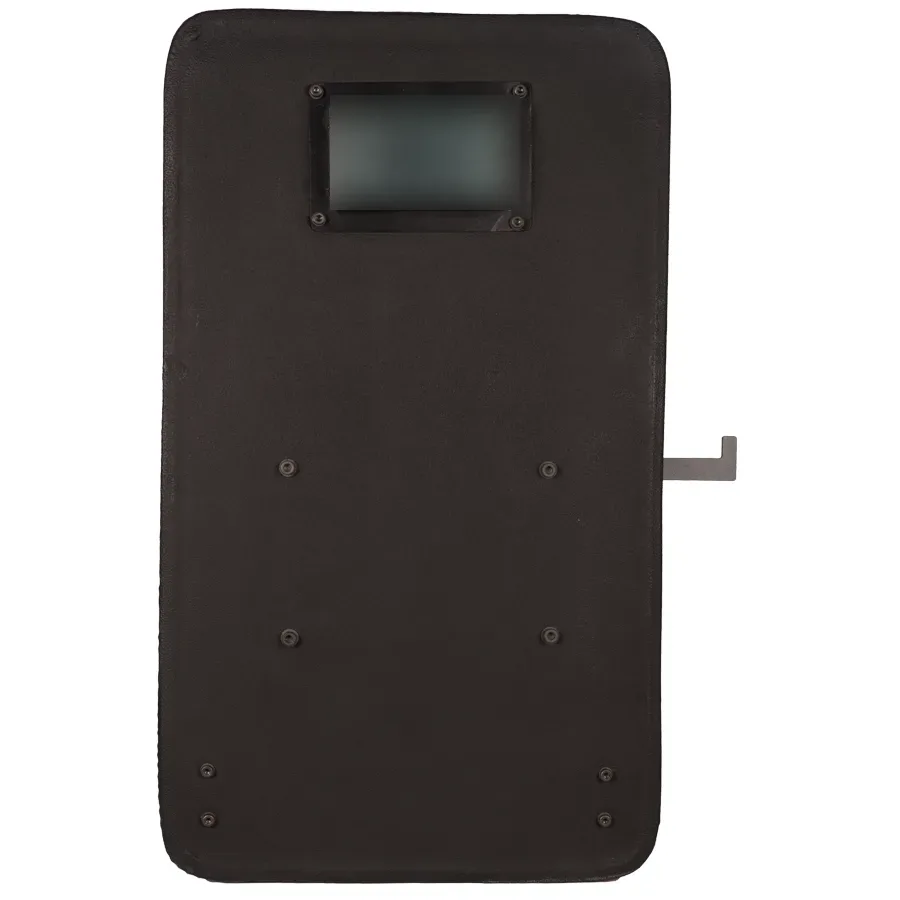
According to the Garanti Kompozit Product Catalogue 2026, the GRBS-316 mobile shield joins three panels that are fixed with screw-in knobs. It deploys in line or folded at 90°. Besides what the diagram below shows, it has an armour-steel firing port that slides with one hand, and the ballistic panels can be replaced.
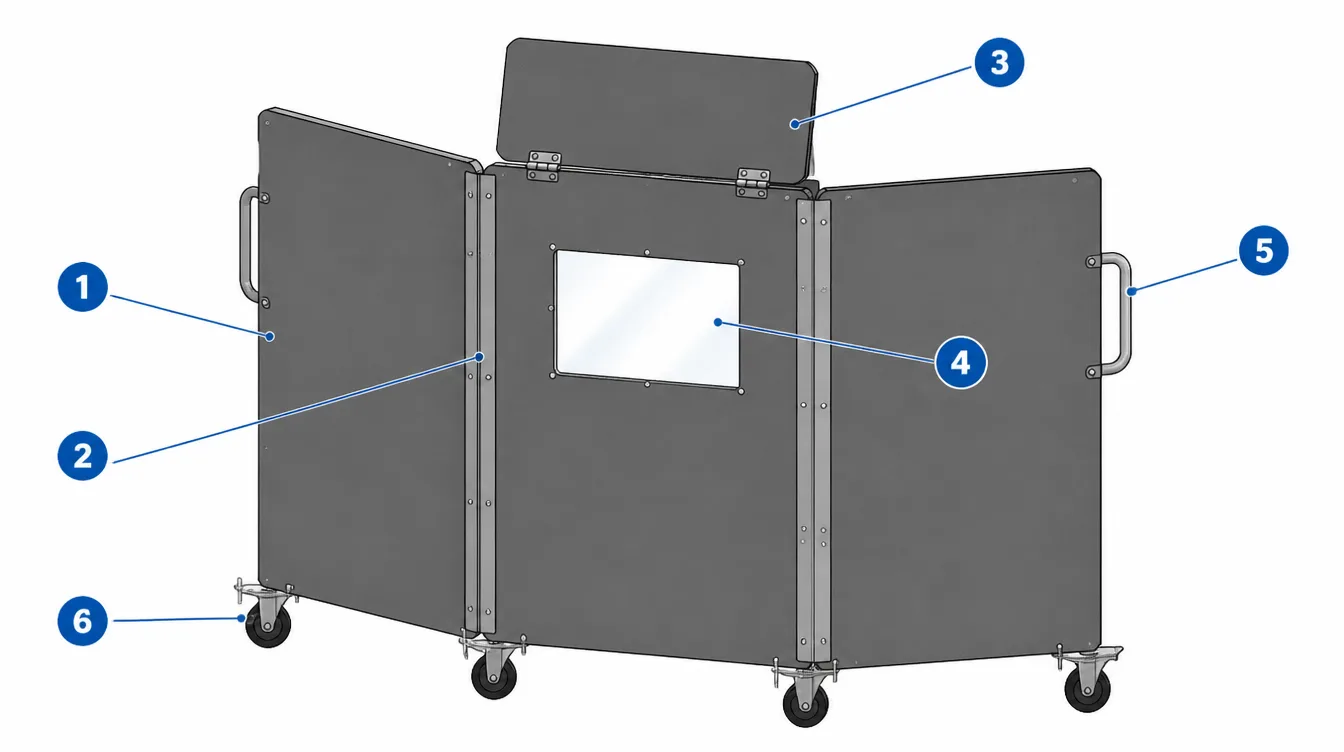
Diagram of a three-panel mobile shield. It is a generic drawing, not a specific model.
- Three panels with polyurea coating.
- Overlapping armour-steel joints.
- Folding top panel.
- Viewport.
- Push handles.
- Wheels with locking pins.
It covers more, but it is pushed, not carried. It needs a place to be stored, a vehicle to transport it and a floor to roll on. In a multi-panel shield, the joints are the point to ask about, just as the viewport is in a hand-held shield. Ask for the offer to include a spare panel and the procedure to replace it.
What is a ballistic briefcase, and how is it different from a shield?
A ballistic briefcase is an ordinary-looking briefcase that unfolds into a shield. It differs from a shield because it can be carried without drawing attention, so it is used in close protection. The Garanti Kompozit GRN-BBRC ballistic briefcase is a black nylon briefcase when closed; when open, it is a three-section UHMWPE shield. It is made in several protection ranges, and the size and colour are adapted to the customer.
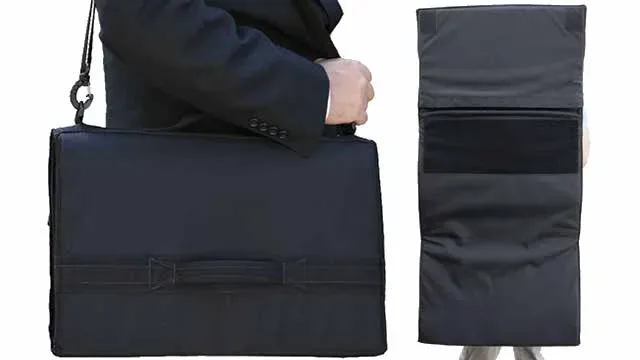
When you compare briefcases, ask for the area it covers when unfolded, the weight when closed and how it opens: with which hand and in how many movements.
The portable flexible shield, a different family
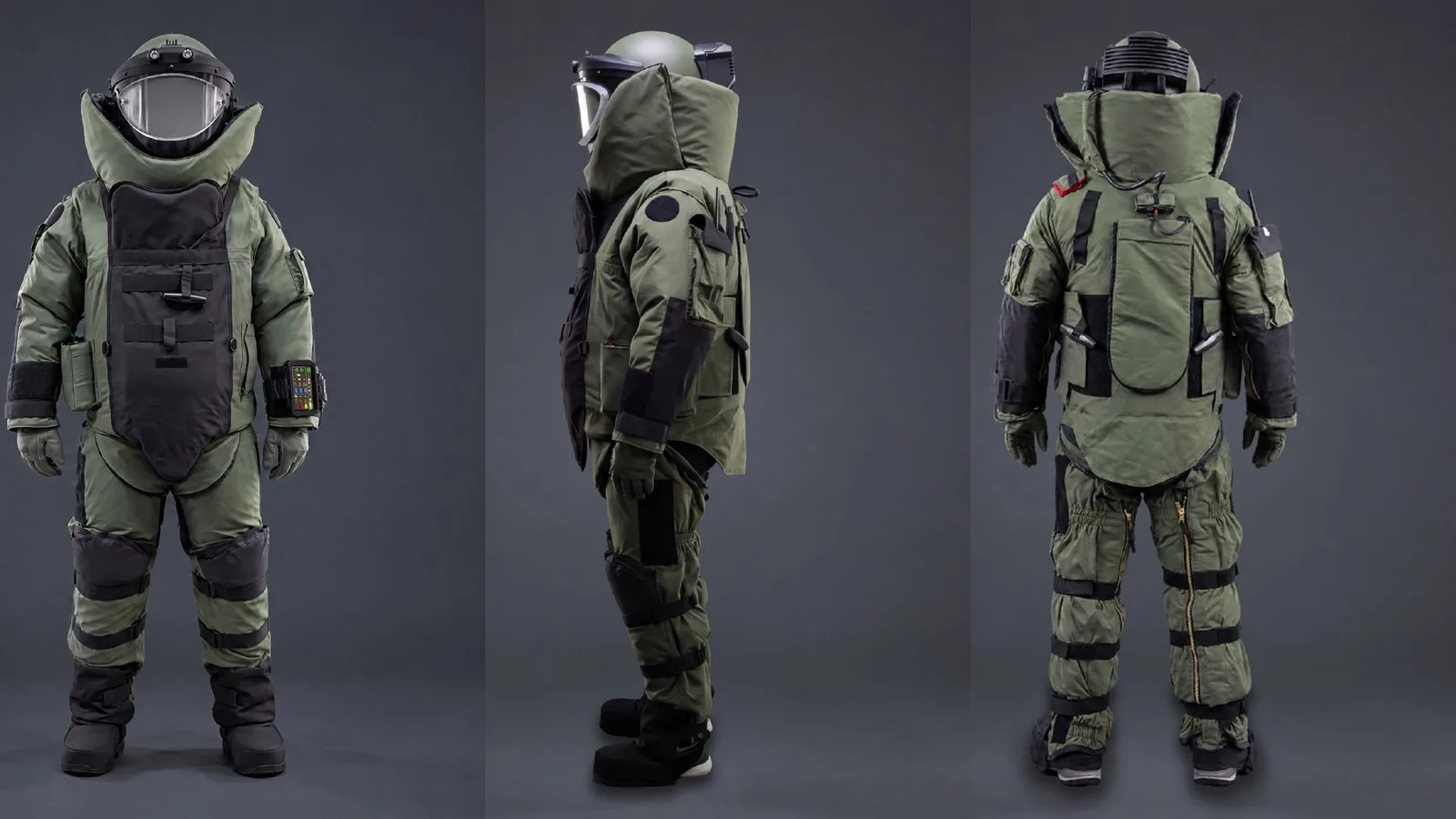
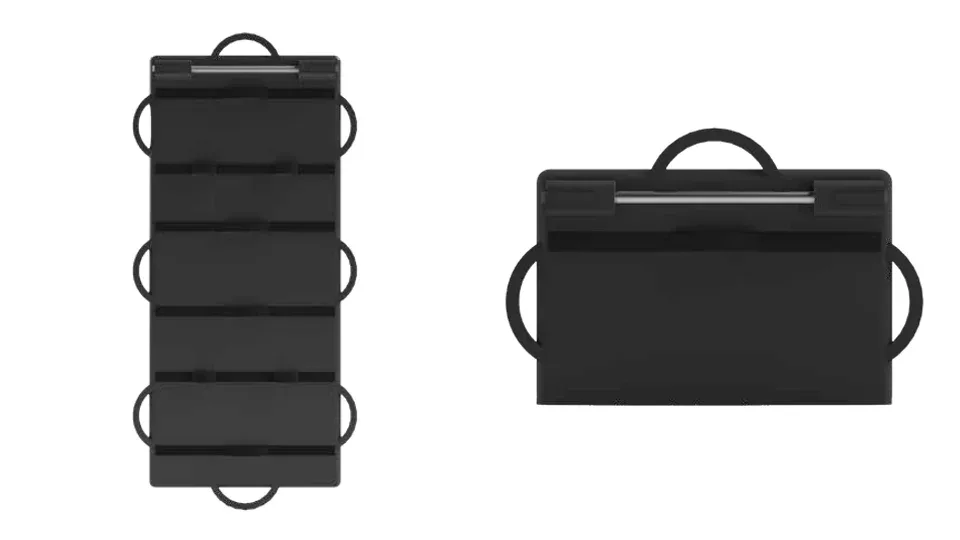
A portable flexible shield is not a folded rigid shield: it is a fabric panel. The GRN-PFRS-0001 portable anti-fragment shield belongs to the Garanti Kompozit explosive ordnance disposal line. It is made of layers of aramid fabric treated to repel water, inside a flame-retardant and water-repellent polyamide 6.6 cover. It is carried folded like a bag and has handles all around its edge. For the buyer, the difference is the standard: the ASTM E3347 shield specification excludes flexible shields and refers them to ASTM E3236/E3236M.
Which standard is a shield tested to, and what does each one cover?
The standard quoted in a data sheet tells you what was tested: a sample of the material or the finished shield. That difference decides whether the viewport, the edges and the joints were tested.
- NIJ Standard 0108.01, “Ballistic Resistant Protective Materials” (September 1985). It applies to all ballistic materials except police body armour and helmets, and it names portable shields as one of their uses (§2.1). It tests a production sample of the material of at least 30.5 × 30.5 cm (§5.1). The edges of the finished shield, the viewport joint and the fixings are outside that sample. It requires a permanent label with manufacturer, type, month and year of manufacture, lot, strike face and certification of compliance with that edition of the standard (§4.3).
- ASTM E3347/E3347M-26, “Standard Specification for Ballistic-Resistant Shields Used by Law Enforcement Officers”. According to its published scope, it tests the penetration resistance of the shield body, edges, viewports, fixings and weak points. It covers hand-held, multi-panel, folding and portable wheeled shields, and it classifies them in ASTM’s own levels. It excludes barriers, fixed or mobile, which are not meant to be moved during an operation, and flexible shields, which it refers to ASTM E3236/E3236M. It is written for law enforcement in the United States.
- NIJ Standard 0123.00 (November 2023). It defines the NIJ protection levels and the associated test threats, without requirements or test methods. The first standard to use it is the body armour standard, NIJ 0101.07. The NIJ expects future revisions of its helmet and shield standards to use it: today it does not apply to shields.
- VPAM-PM, version 3, “Durchschusshemmende plattenartige Materialien” (status of 15 March 2021). It is the guideline of VPAM, the European association of test laboratories, for plate-type materials against handguns and long guns, with impact at 90° (§4.2.1). It tests samples of 500 × 500 mm (± 10 mm) (§6.3): it is also a material test.
Our recommendation: ask for the laboratory report with the standard, the edition and the tested sample, material or complete shield. If there is only a material test, also ask for the viewport test. If an offer quotes NIJ 0123.00 for a shield, ask which method it was tested with. Garanti Kompozit designs its shields to each buyer’s technical requirements and puts them through the test protocol of its own ballistic laboratory. It provides the level and weight of each configuration on request.
What should you ask for in the data sheet before you buy?
A complete data sheet answers these questions. Send the list to the manufacturer as it is and compare the written answers.
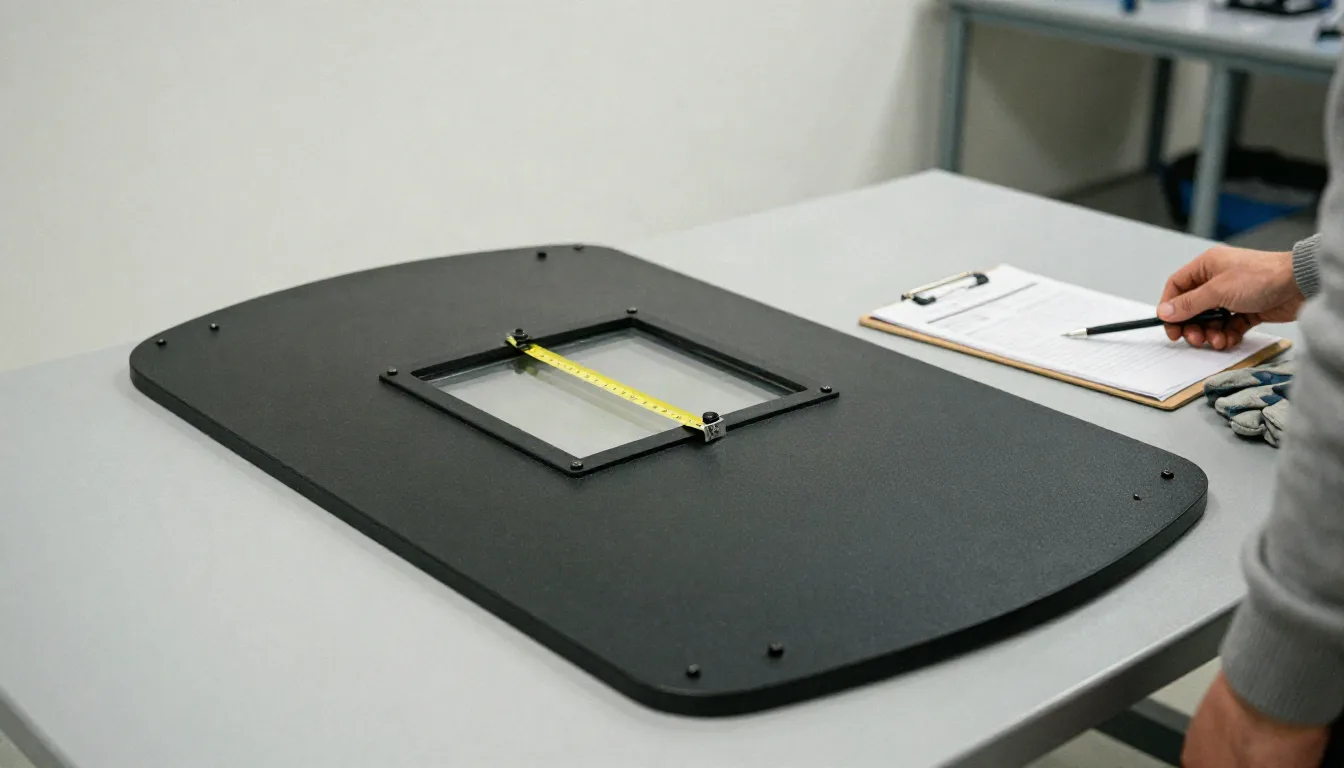
- Test standard and edition, level and laboratory report: who tested, when, and which sample, material or complete shield.
- Protected area and overall dimensions; weight of the complete unit with all accessories fitted.
- Viewport: its own dimensions, material, level and standard. They may differ from those of the body.
- Curvature: flat or single curve, with its radius, and the height it covers in the position of use.
- Handles and straps: use by right- and left-handers, arm straps and foam pad.
- Lighting: power, modes, battery, run time, IP rating and charging method.
- Coating, for example polyurea, and protection of corners and edges.
- Label: manufacturer, type of material under the standard, month and year, lot and strike face, as NIJ 0108.01 requires in its §4.3.
- For the mobile shield: number of panels, type of joint, wheels and brakes or locking pins, and whether the panels can be replaced.
- Warranty, service life and storage: the conditions for each, and available spare parts, such as the battery and the viewport.
If you are preparing a purchase, ask AHCEBRIAN for the technical data sheet of the Garanti Kompozit ballistic shields. The purchase and import of this equipment require authorisation; we only work with authorised public bodies and companies. Tell us which body or company you represent, for which operation and in what quantities.
What to do now
- Define the operation and the transport: who will use the shield, for what, and where it will be stored until it is used.
- Choose the type with the table: hand-held with viewport, lightweight curved, large-format or mobile, close protection briefcase or portable flexible.
- Send the data sheet list to the manufacturer: and ask for each answer to come with its supporting document.
- Check what was tested: material or complete shield, with the viewport and the joints included or tested separately.