Minimum legal mesh size and fishing gear marking: EU rules by gear and area (2026-2027)
The EU sets the minimum mesh size of each fishing net by gear and area, always as stretched mesh size. From 2026, EU gear marking rules also require the registration label on the footrope of passive nets and, from 2027, on the trawl door.
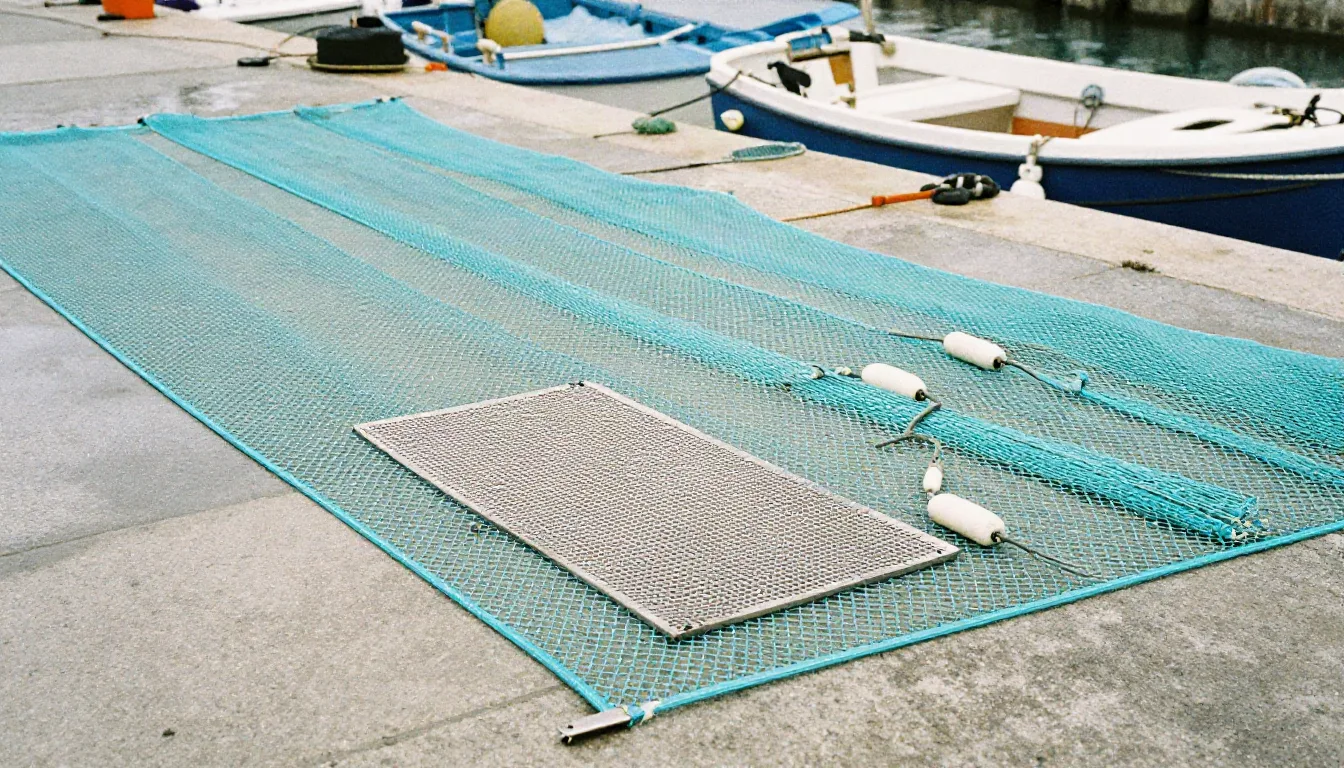
Regulation (EU) 2019/1241 sets the minimum legal mesh size by gear and by area, and it is always the stretched mesh size. Examples: 40 mm square mesh in the trawl codend in the Mediterranean; in South Western waters, 70 mm for trawls and 100 mm for static nets (80 mm in ICES division 8c and sub-area 9). From 10 January 2026, Implementing Regulation (EU) 2025/2196 also requires the vessel registration label on the footrope of passive nets, not only on the upper first row.
In short
- The legal figure is the stretched mesh size: from knot to opposite knot, not the length of one side of the mesh.
- The minimum depends on the gear and the area: for example, 14 mm for surrounding nets in the Mediterranean and 220 mm for static nets that target anglerfish in the Atlantic.
- New EU fishing gear marking rules: from 10 January 2026, passive nets carry the registration label on the footrope as well; from 10 January 2027, trawls are also marked on the trawl door and on the selvedges of the codend.
What is the minimum legal mesh size and how does the EU define it?
The legal term is "mesh size". Article 6, point 34, of Regulation (EU) 2019/1241 defines it for knotted netting as "the longest distance between two opposite knots in the same mesh when fully extended". For knotless netting, it is "the inside distance between the opposite joints in the same mesh when fully extended along its longest possible axis".
This is the stretched mesh size of a fishing net: the mesh pulled fully closed, measured from one knot to the opposite knot. Some catalogues give the side instead, which is the bar between two adjacent knots. Others, including the Tunanets catalogue, do not say which measure they give. The regulation gives no formula to convert one into the other, and the knot also takes up length. Do not convert in your head: ask for the stretched figure.
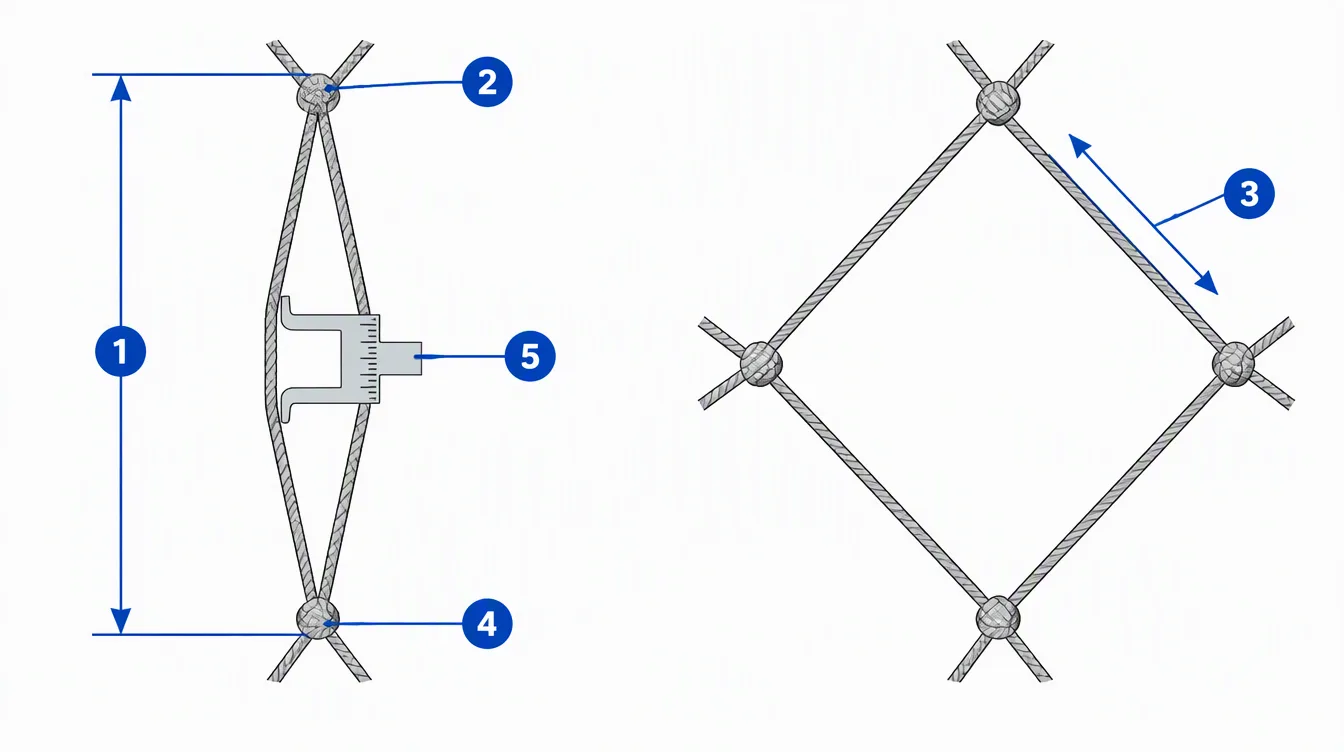
Figure 1. Stretched mesh size compared with the side of the mesh.
- Stretched mesh: distance between the two opposite knots with the mesh closed. This is the figure the law sets.
- Knot at one end of the measure.
- Side or bar: the length of twine between two adjacent knots. Some catalogues call this the "mesh".
- Opposite knot, at the other end of the measure.
- Inspection gauge, with its two jaws inside the mesh.
The regulation separates square mesh (Article 6(35)) from diamond mesh (Article 6(36)). In the Mediterranean trawl codend, the minimum changes with the mesh type. Fisheries control uses the same unit: in the fishing logbook, the mesh size "shall be given in millimetres (mesh stretched)", together with the mesh type (Annex XV of Implementing Regulation (EU) 2025/2196).
What minimum mesh size does the EU require by gear and area?
The minimums are in the annexes of Regulation (EU) 2019/1241, one annex per sea basin. The table shows the values that matter most for fleets in Spain, Portugal and the rest of south-western Europe. The areas are those of Article 5. The Mediterranean Sea is the water east of the 5° 36′ W meridian. South Western waters are ICES sub-areas 8, 9 and 10 (Union waters) and CECAF divisions 34.1.1, 34.1.2 and 34.2.0. CECAF is the Fishery Committee for the Eastern Central Atlantic. North Western waters are ICES sub-areas 5, 6 and 7. In its stock reports, ICES (International Council for the Exploration of the Sea) calls divisions 8c and 9a "Cantabrian Sea and Atlantic Iberian waters". They are part of South Western waters.
Gear | Mediterranean (Annex IX) | South Western waters (Annex VII) | North Western waters (Annex VI) |
|---|---|---|---|
Trawl (codend) | 40 mm square mesh, or 50 mm diamond mesh at the duly justified request of the vessel owner; 20 mm for directed fishing for sardine and anchovy | 70 mm; 55 mm in ICES division 9a east of 7° 23′ 48″ W | 120 mm; 100 mm in ICES divisions 7b to 7k |
Surrounding nets | 14 mm | No baseline size in Part B of the annex | No baseline size in Part B of the annex |
Bottom-set gillnets and static nets (baseline) | 16 mm (bottom-set gillnets) | 100 mm; 80 mm in ICES division 8c and sub-area 9 | 120 mm |
Static nets: minimums by species | 100 mm for gillnets, entangling nets or trammel nets that target red sea bream (Part C) | 80, 60, 50 and 40 mm by species, if hake by-catch does not exceed 20% | 100 mm (90 mm in 7d) and 50 mm by species, if cod, haddock and saithe by-catch does not exceed 20% |
Static nets that target anglerfish | No specific value in the annex | 220 mm | 220 mm |
Source: Regulation (EU) 2019/1241, Annexes VI (Part B, points 1.1 and 2), VII (Part B, points 1.1 and 2) and IX (Parts B and C), checked against the consolidated version of 1 January 2026. Consulted on 10-10-2026.
For trawls, the mesh size that counts is the smallest of any codend and extension piece on board (Article 8(1)). One spare codend with a smaller mesh is enough to break the rule. The derogations with smaller meshes, including those for trawls in South Western waters (Annex VII, Part B, point 1.2), only apply with their conditions on species and by-catch. In ICES divisions 7d and 7e, Annex VI requires 110 mm for static nets that target pollack and hake.
Are there limits on twine, drop and length as well as mesh size?
Yes. In the Mediterranean, these limits affect the netting you buy. Point C.3.2 of Annex IX prohibits "any gillnet, entangling net or trammel net constructed with a twine thickness greater than 0,5 mm". The twine is the yarn that forms the mesh. For trawls, a note to the table prohibits netting with a twine thickness greater than 3 mm or with multiple twines, and twine thicker than 6 mm in any part of a bottom trawl.
The polyamide monofilaments of the Tunanets fishing nets are made in 0.14, 0.16, 0.18, 0.23, 0.25 and 0.28 mm, according to the Tunanets "Polyamide Monofilament" sheet (light blue, thermal double knot). All of them are below the 0.5 mm limit of Annex IX. This is a comparison of figures, not an approval: the limit applies to the net that the vessel uses. Multifilament is different: the general sheet for Tunanets nets gives a twine thickness of 0.2 to 3.0 mm. If you fish with gillnets or trammel nets in the Mediterranean, ask for the twine diameter in writing. "Polyamide" alone is not enough.
Annex IX also limits the size of Mediterranean nets:
- Drop and length on board: 4 m drop for trammel nets and 10 m for bottom-set gillnets or combined nets (30 m if the net is shorter than 500 m). On board, no more than 2,500 m of combined gillnets and trammel nets and 6,000 m of gillnets, entangling nets or trammel nets (C.3.1 and C.3.3).
- Purse seines and seines without purse lines: no more than 800 m long with a drop of 120 m, except purse seines that target tuna (C.2).
For the whole Union, Article 9 prohibits driftnets longer than 2.5 km on board. It also prohibits bottom-set gillnets, entangling nets and trammel nets where the charted depth is greater than 200 m. This depth limit does not apply in the Mediterranean (Article 9(7)). In South Western waters, between 200 and 600 m, Annex VII (Part C, point 4.1) allows specific nets with their own mesh size and drop. One example is entangling nets for anglerfish with a mesh size of at least 250 mm and no more than 15 meshes deep.
Can national rules require more?
Yes. The clearest example in Spain is trawling in the Mediterranean. Order APA/312/2025 of 31 March adds Article 10 ter to Order APA/423/2020. From 1 June 2025, the Spanish Mediterranean trawl fleet uses a codend with a square mesh of at least 45 mm in the coastal fishery and 50 mm in the deep-water fishery. This is more than the 40 mm of Annex IX. The consolidated text of Order APA/423/2020 (updated on 16-07-2026) shows no later changes to that article.
In Portugal, Portaria No 227/2023, amended in 2025, sets its own mesh sizes for gillnets. Check the version in force in the Diário da República or ask the DGRM, the Portuguese fisheries authority. In Spain, for any fishing ground with its own rules, ask your cofradía (local fishers' association) or the General Secretariat of Fisheries before you order the netting. In other Member States, ask the national fisheries authority.
How does an inspector measure the mesh?
The official method is in Regulation (EC) No 517/2008, which EUR-Lex lists as in force. It uses the same definition of mesh size as Regulation (EU) 2019/1241. The mesh gauge has two jaws and applies forces "in the range of 5 to 180 Newton (N) to the meshes with a precision of 1 N". The procedure, in brief:
- The inspector measures 20 meshes: consecutive meshes on active gear; on passive gear, in the part of the net with the smallest mesh (Articles 6 and 7).
- Meshes within three meshes of the selvedge, lacings and ropes are not measured, and neither are broken or repaired meshes.
- Meshes are measured "only when wet and unfrozen" (Article 11).
- The result is the mean of the 20 meshes (Article 13). If the master does not agree, 20 more meshes are measured in another part of the net, and the mean of all 40 is final (Article 14).
Twine thickness is checked with a gauge that has an opening of the maximum permitted diameter (Articles 15 to 22). For the buyer, one practical point follows: the stretched mesh size you order should leave a margin above the legal minimum.
What changes in fishing gear marking in 2026 and 2027?
Fishing gear marking means showing the vessel's registration on the gear itself. It is not new. Implementing Regulation (EU) No 404/2011 already required passive nets to carry the registration "on a label attached to the upper first row" (Article 11(2)(a)), and beam trawls to show it on the beam (Article 10). From 10 January 2026, Articles 10 to 13 of Implementing Regulation (EU) 2025/2196 apply. This regulation implements Control Regulation (EC) No 1224/2009, as amended by Regulation (EU) 2023/2842. The marking of trawls (Article 11) applies from 10 January 2027 (Article 82). Fishing with passive gear, marker buoys or trawls that are not marked is prohibited (Article 10(3)).
- Passive nets (Article 12(2)): the vessel's external registration letters and numbers, displayed permanently, "on a label attached to the upper first row, and on the footrope". For gear longer than 1 nautical mile, labels at intervals of no more than 1 nautical mile. Under Regulation 404/2011, the label on the upper first row was enough; the footrope is new.
- Labels (Article 13): made of durable material, securely fitted, clearly readable, and not removable or effaced. A coastal Member State can authorise labels that are read with electronic devices.
- Trawls (Article 11, from 2027): registration on the beam (beam trawls), on the trawl door, where present, and on each selvedge of the upper section of the codend. The trawl door and the selvedges are new.
- Small vessels: for vessels up to 15 m that fish only in the waters of their flag Member State and within 4 nautical miles, that Member State can set an alternative marking system (Article 12(3)). Vessels under 12 m to which the control regulation applies later remain under Implementing Regulation (EU) No 404/2011 until then (Article 80).
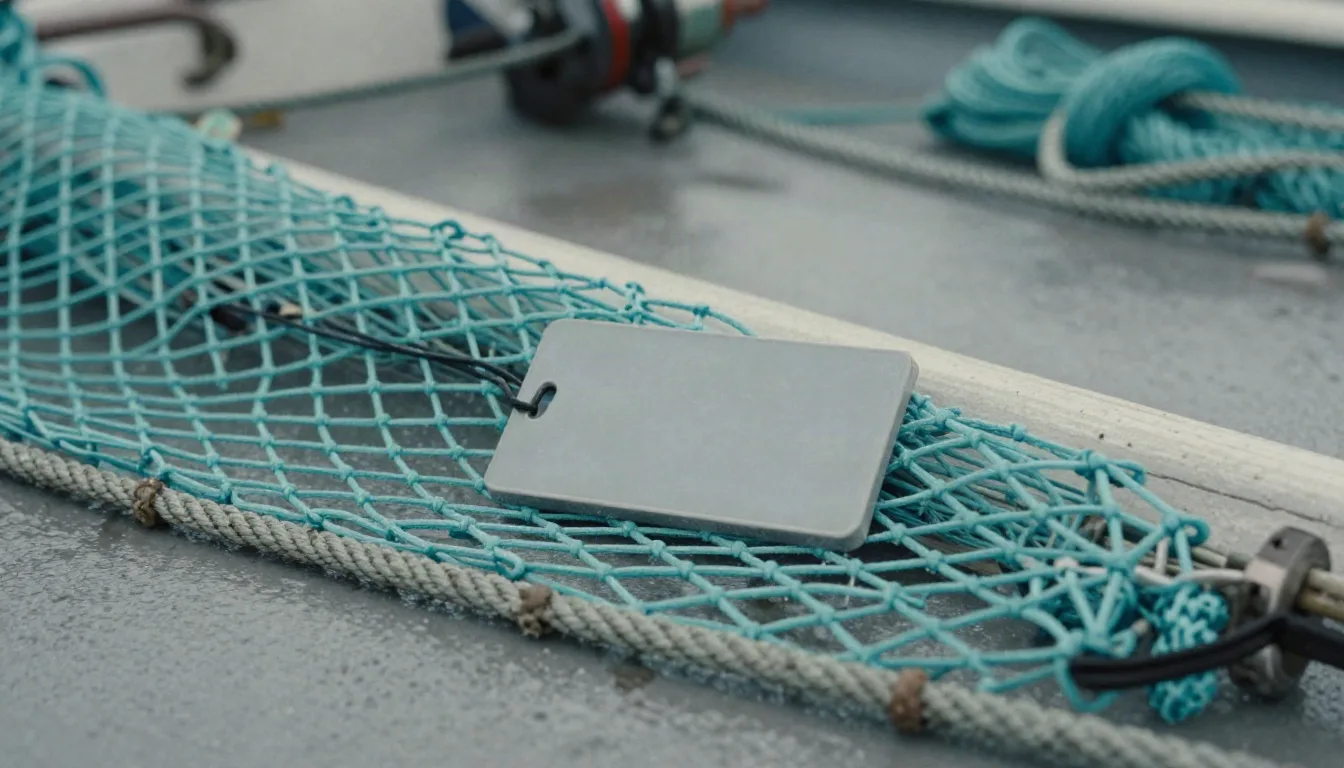
The label carries the registration of one specific vessel, so it is fitted when the net is rigged for that vessel. Ask your supplier whether it delivers netting or a rigged net with ropes: this decides who fits the labels.
How do you order netting without mesh size problems?
Our position is simple: always state the stretched mesh size and always give the twine diameter in millimetres, in writing, in the order. This is the unit of the fishing logbook and of the inspector. We also say this because the Tunanets catalogue we publish lists, for its line of knotted and monofilament fishing nets, "mesh from 10 to 300 mm" without saying if this is the side or the stretched mesh. That range shows what can be made. It does not tell you if a net complies.
An order sheet that avoids misunderstandings has six items:
- Stretched mesh size in mm, with the tolerance you accept.
- Mesh type: diamond or square.
- Construction: knotted, double knot or monofilament.
- Twine: diameter in mm for monofilament; count and plies for multifilament (210/9 means nine plies of 210 denier).
- Depth in meshes and length of the netting.
- Material and colour: polyamide (Nylon 6) or HDPE.
Tunanets names its netting with a twine-mesh-depth format: on its website, 9-70-64 means 210/9 twine, 70 mm mesh and 64 meshes deep. The format does not say if the mesh is stretched. In an order for fishing nets, add this next to the figure.
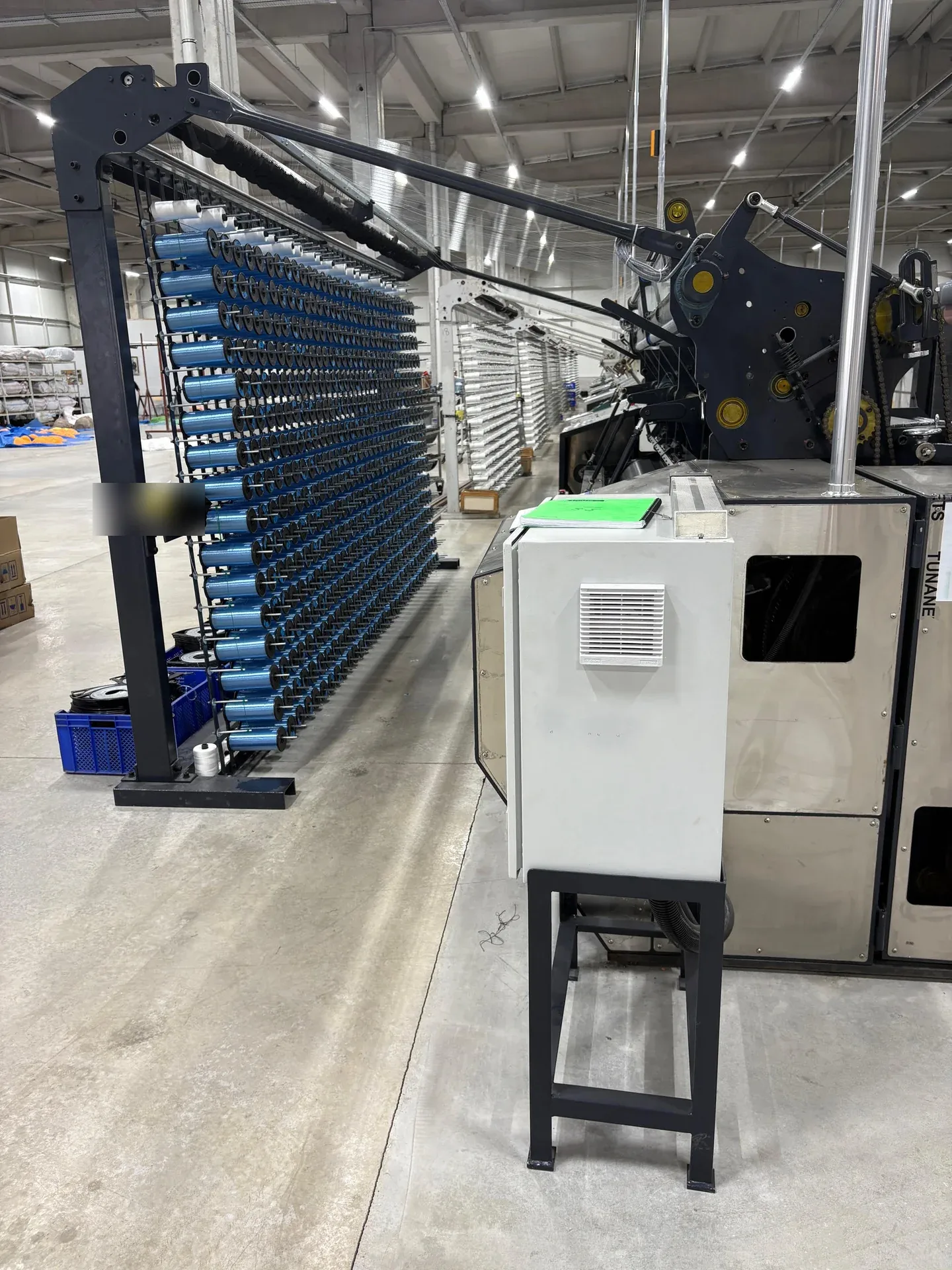
Tunanets makes knotted and double-knot netting on 22 Amita machines in Yozgat (Türkiye), and polyamide monofilament netting. It works with polyamide (Nylon 6) and HDPE. The same knotted netting is also used away from the sea, for example as knotted netting for agriculture. AHCEBRIAN S.L. distributes these nets in Europe. If you are preparing an order, ask for the technical sheet of the netting with the stretched mesh size and the twine diameter stated, or ask for a sample to measure yourself.
What to do now
- Find your area and your gear in Annex VI, VII or IX of Regulation (EU) 2019/1241, with its derogations.
- Check national rules: 45 or 50 mm for Spanish trawling in the Mediterranean; in Portugal, Portaria No 227/2023 as in force; elsewhere, your national fisheries authority.
- Ask for the stretched mesh size in writing, with the mesh type, and leave a margin above the minimum.
- Check the twine diameter if you set gillnets, entangling nets or trammel nets in the Mediterranean: 0.5 mm maximum.
- Prepare the labels with the registration for the upper first row and the footrope and, if you trawl, for the beam, the trawl door and the codend before 10 January 2027.
Legislation consulted on 10-10-2026 on EUR-Lex and in the BOE (Spanish Official State Gazette). This article helps you buy netting; it is not legal advice. If in doubt, the official text in force prevails.